
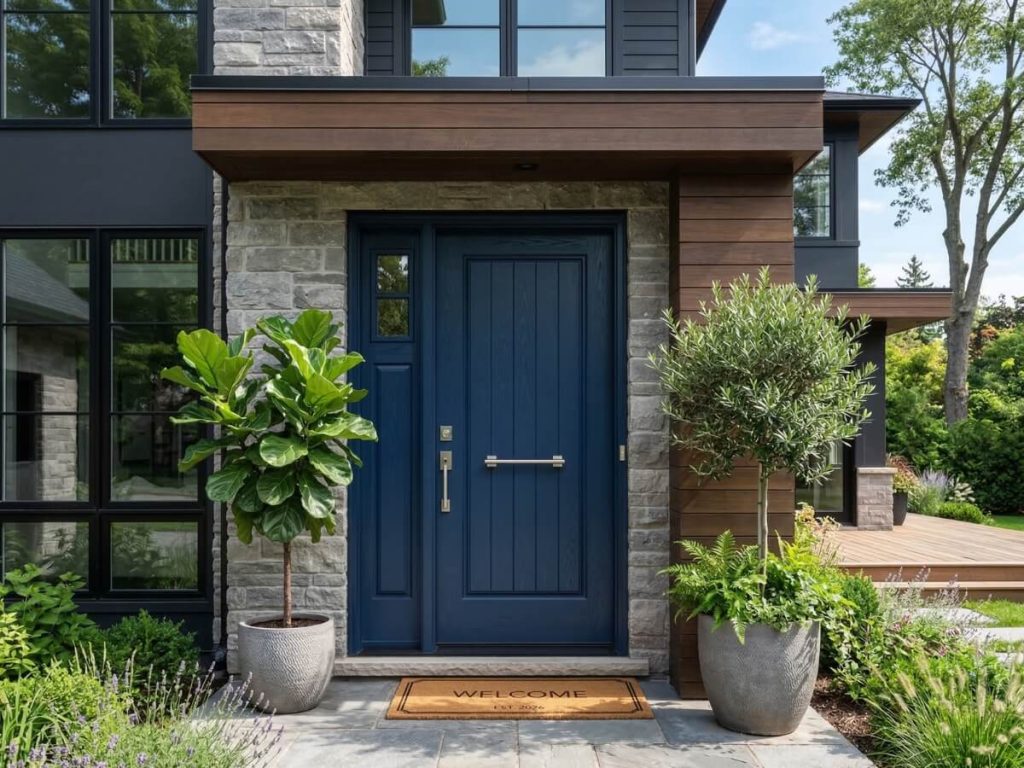
You likely do not need a storm door in 2026 if you have a modern, well-insulated fiberglass or steel entry door. Installing a storm door over a new front door can trap excessive heat. This extreme heat buildup can melt plastic components, warp weather stripping, and officially void your entry door warranty. Storm doors are only recommended for older, drafty wooden doors or entryways lacking a protective roof overhang.
Are Storm Doors Still Necessary for Modern Homes?
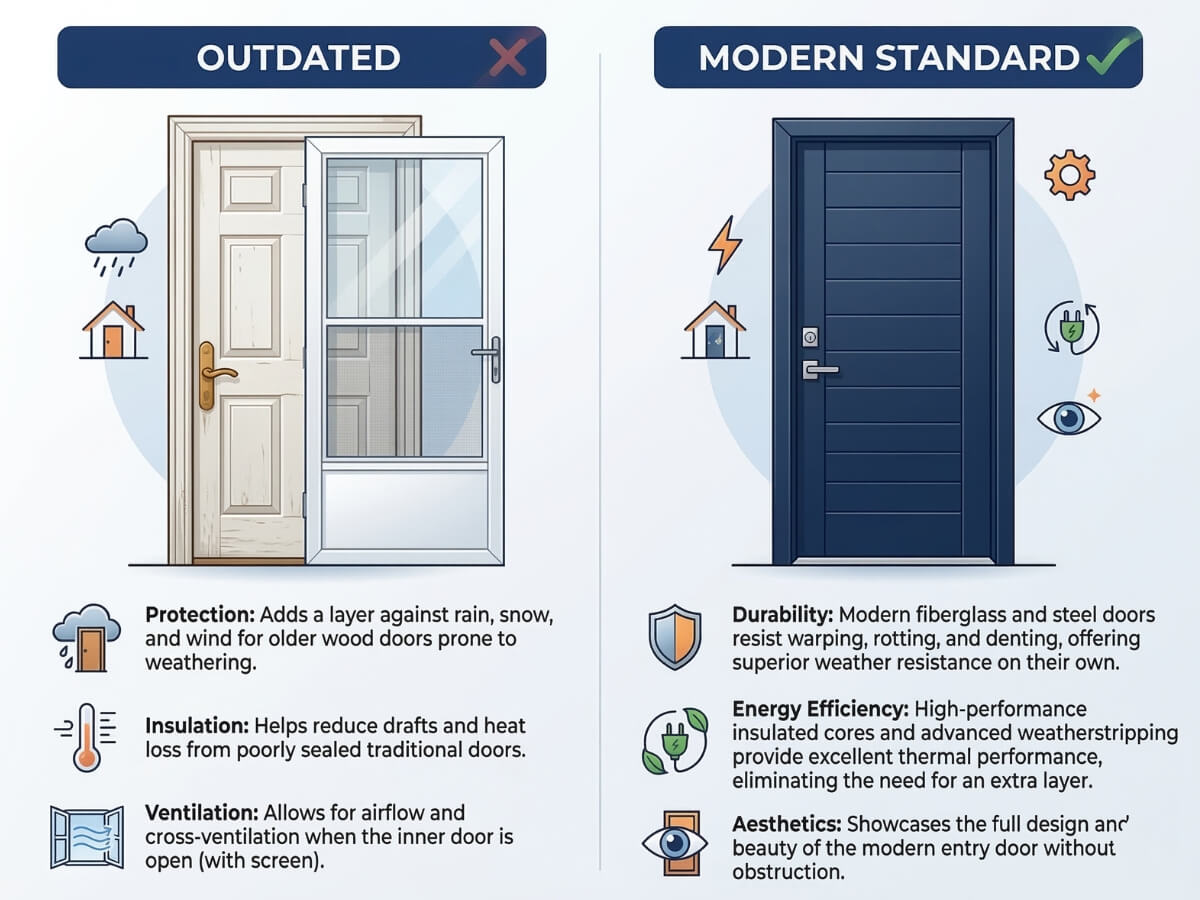
Homeowners have relied on storm doors for decades to block winter winds and keep rain away from their primary entry doors. Older wooden doors were notoriously drafty and prone to rotting. A secondary barrier was absolutely essential to protect that wood and keep the house warm.
Fast forward to 2026. Door manufacturing technology has completely transformed.
Today, high-quality entry doors in the GTA are engineered to withstand severe weather on their own. They do not require a secondary shield to perform efficiently. Here at ALDA, we constantly remind our customers that modern doors are built entirely differently than the doors from thirty years ago.
How Modern Doors Changed the Game
Modern exterior doors prioritize maximum insulation and durability. A secondary glass door is usually redundant. In fact, a modern front door in the GTA provides all the weather resistance you need.
- Advanced Core Materials: Most new doors feature a dense polyurethane foam core.
- Superior Weatherstripping: Interlocking synthetic weather seals block drafts completely.
- Rot-Proof Frames: Composite door jambs eliminate the risk of moisture damage and wood rot.
How Can a Storm Door Void Your Entry Door Warranty?
This is the biggest shock for most homeowners. Adding a protective glass layer can actually destroy your beautiful new front door. Manufacturers know this, and they structure their warranties accordingly.
The problem comes down to basic thermodynamics. A storm door creates a small, sealed air pocket right in front of your primary door. When direct sunlight hits that outer glass, it acts exactly like a greenhouse.
The heat gets trapped with nowhere to escape. Temperatures in that tiny space can easily soar past 200 degrees Fahrenheit on a sunny summer afternoon. This extreme heat is devastating to modern door materials.
What Exactly Gets Damaged by Trapped Heat?
Manufacturers will immediately void your warranty if they detect heat damage caused by a trapped air pocket. They will not cover the cost of a replacement door. The intense heat causes several specific failures.
- Warped Frames: Extreme temperatures can cause fiberglass or steel door skins to bow and warp permanently.
- Melted Components: Plastic trim around glass inserts can literally melt and droop down the door.
- Peeling Paint: The intense heat bakes the paint right off the surface of the door.
- Destroyed Weatherstripping: Rubber and silicone seals dry out, crack, and lose their ability to block drafts.
When Should You Actually Install a Storm Door?
There are still a few specific scenarios where this addition makes perfect sense. You just need to evaluate your specific entryway carefully.
If you have a vintage, solid wood door that you want to preserve, a secondary glass layer is a smart idea. Older wood requires protection from direct moisture to prevent swelling and rot.
You might also want one if you live in an extremely mild climate and want to allow cross-breeze into your home. A screen door function is highly desirable in these specific cases. However, you must ensure your entryway does not receive direct, intense sunlight during the hottest parts of the day.
| Scenario | Recommendation | Reasoning |
|---|---|---|
| New Fiberglass Door | Skip It | Risk of heat damage and warranty void. |
| New Steel Door | Skip It | Modern steel is well-insulated and weather-tight. |
| Direct Sunlight Exposure | Skip It | High risk of the greenhouse effect melting components. |
| Historic Wood Door | Install It | Protects delicate wood from rain and snow. |
| Need for Ventilation | Install It | Screen functions allow fresh air into the home. |
What Are the Best Alternatives to a Storm Door?
You want to protect your home and improve energy efficiency without risking your warranty. Thankfully, there are better ways to achieve this in 2026. Upgrading your primary door is always the smartest first step.
If you are choosing between fiberglass and steel, you will find that both options offer incredible thermal protection. A properly installed premium door will seal your home perfectly against the elements.
According to the U.S. Department of Energy, upgrading to a modern, energy-efficient door is often all you need to reduce heat loss. You simply do not need redundant layers.
Invest in Proper Entryway Architecture
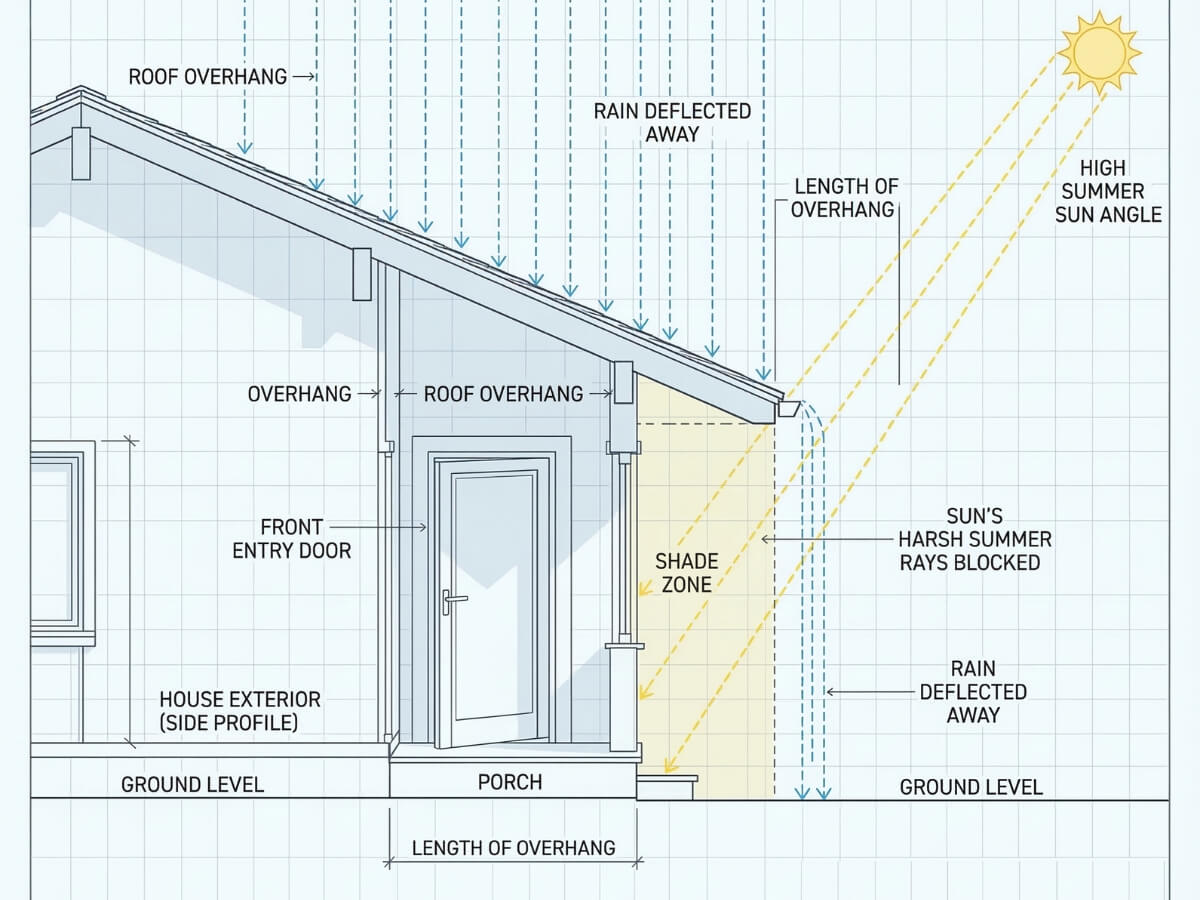
Instead of adding extra glass, look at the structure surrounding your door. A protective roof overhang is the absolute best way to shield your entryway. It blocks rain and prevents direct UV rays from baking your door.
Upgrading your weatherstripping is another fantastic alternative. If you feel a draft, the solution is usually replacing the seals rather than installing a whole new exterior frame. You should also focus on properly maintaining your exterior doors to extend their lifespan naturally.
Does a Storm Door Actually Save Energy in 2026?
Many people buy secondary doors thinking they will drastically slash their heating bills. This was true forty years ago. It is no longer true today.
The energy savings gained by adding a glass layer over a modern, insulated door are incredibly minimal. The primary door is already doing 95 percent of the heavy lifting. The cost of buying and installing the secondary unit will likely never be recouped through energy savings alone.
You are much better off investing that money into a higher-quality primary door. A premium fiberglass door with triple-pane glass inserts will provide massive energy benefits without any warranty risks. Keep your entryway simple, elegant, and fully protected by the manufacturer.
Not sure your current door is the problem? Book a free in-home estimate and we’ll tell you straight.