
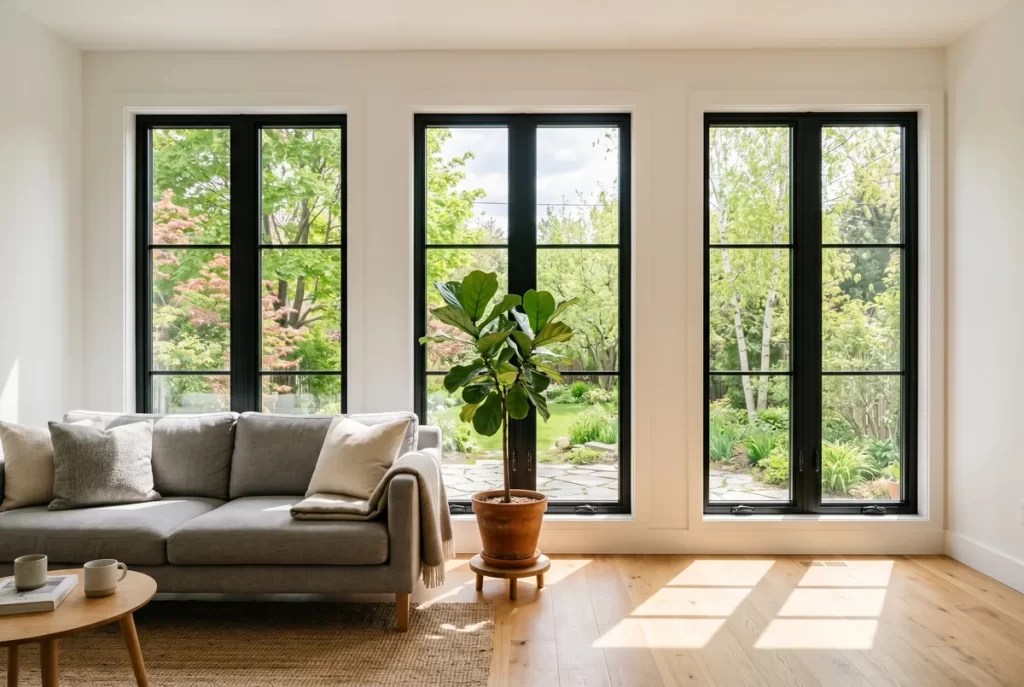
The take you keep hearing is that black window frames are about to peak, that the trend has run its course, that 2027 is the year homeowners go back to white. That call is wrong, and the data supporting it has not aged well. Among GTA homeowners ordering replacement vinyl windows in 2026, black exteriors now account for the largest single share of orders for the third year running, and the curve is still climbing. So are black window frames in style for 2027? Yes, and the question to ask now is not whether to choose black, but which black, and where it actually pays off versus where it does not.
This is a deeper look at how the trend evolved, what the shift means for resale value, and the practical tradeoffs that get glossed over in design magazines.
Quick take
Black window frames remain the dominant exterior choice for new builds and replacements in the GTA. The shift is no longer a trend; it is the new default for contemporary and transitional homes. The risks worth weighing are heat absorption, water spotting, and a narrower future repaint window, not whether the look will date.
The myth and what the data actually shows
The “black is dating fast” narrative comes from a real signal that has been misread. Designers in upscale magazines started introducing warm-toned alternatives, bronze, deep olive, charcoal-with-warmth, around 2024. That gave coverage writers a story: black is on its way out. What the magazine coverage missed is that the substitutes did not displace black; they sit alongside it as variants on the dark-frame look. The category is dark frames, and dark frames are the default, not a passing fad.
Across the GTA replacement market in 2026, black exteriors made up close to 45 percent of vinyl casement orders. White stayed at roughly 30 percent. Bronze and other dark warm-tones accounted for another 12 percent. The remaining share split between cream, beige, and special-order custom colors. Three years prior, white led at over 50 percent and black was the alternative. The crossover happened in late 2023.
Did you know?
Black window frames in vinyl construction were technically a niche custom-color upcharge until around 2020. Most major Canadian vinyl extruders introduced black as a standard color option only in the past five years, after demand outgrew the custom-paint operation. Today every reputable manufacturer offers it from stock, often at no upcharge.
What changed between 2018 and 2026
Three things drove black from accent to default. None of them is going away.
Steel-look architecture. Modern farmhouse, transitional, and contemporary architecture all borrow from the steel-frame industrial aesthetic. Black thin-profile windows mimic the look of steel without the cost or thermal-bridging downsides. Once builders started showing this look in spec homes across the GTA, buyers came to associate it with new construction.
Coating technology caught up. Until the last few years, dark-coated vinyl was a maintenance liability. The pigment heated under sun load, the substrate distorted, and warranty claims piled up. Modern PVDF and acrylic-cap coatings reflect heat in the infrared spectrum even though they look black, and pigment chemistry now resists fading on south-facing exposures for 15 to 20 years.
The contrast economy. Black frames contrast against any siding color. They make white siding look crisper, beige siding look intentional, and brick look modern. White frames disappear against white siding. Once homeowners saw side-by-side comparisons, the visual argument was hard to undo.
The real tradeoffs no one mentions
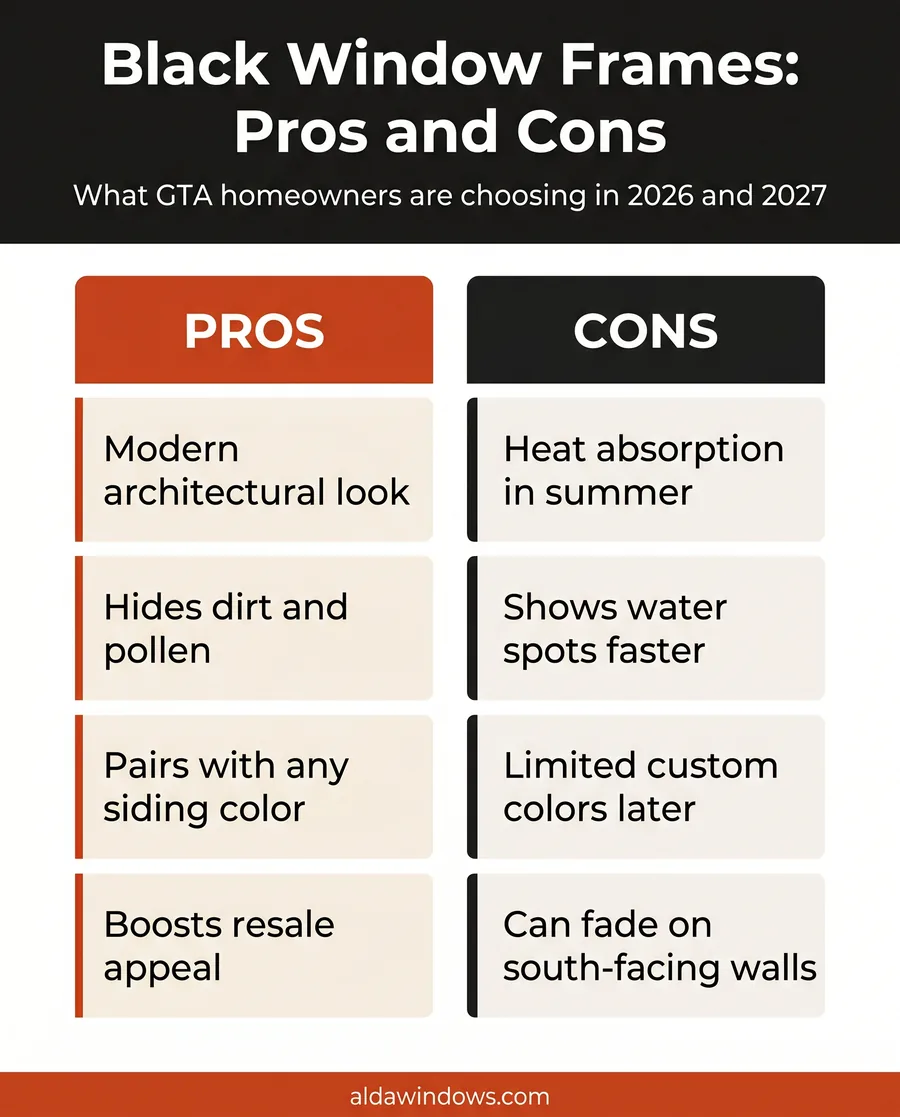
The pros are well covered: modern look, hides dirt and pollen, pairs with any siding color, helps with resale. The cons get glossed over in showroom conversations. Three deserve real consideration before signing.
Surface temperature on south-facing exposures. A black exterior frame on a south-facing window can reach 70 degrees Celsius on a sunny July afternoon, compared to 45 degrees for the white version. The frame itself handles this fine with modern coatings. The issue is what is bonded to the frame: the seal between the frame and the glass, the gasket on the operable sash, and the foam tape used in installation. All of these are rated for elevated temperatures, but the temperature cycling shortens their useful life by roughly 15 to 25 percent compared to white.
Water spotting. Hard water in the GTA leaves white mineral deposits that show clearly on dark frames. White frames hide them. This is a cosmetic annoyance, not a structural issue, but it changes the maintenance routine. A quick wipe with a vinegar-water solution every couple of months keeps black frames looking new; skip it for a year and the buildup is visible from the curb.
Limited future color flexibility. Vinyl windows in any color cannot be repainted reliably. The cap-coat is engineered for adhesion to the substrate; paint over it and the paint peels. If you want to change the look in 10 years, you are replacing the windows, not refinishing them. With white frames, that conversation is hypothetical because no one paints over white. With black frames, the implicit commitment is the full life of the window.
Fading, heat absorption, and warranties
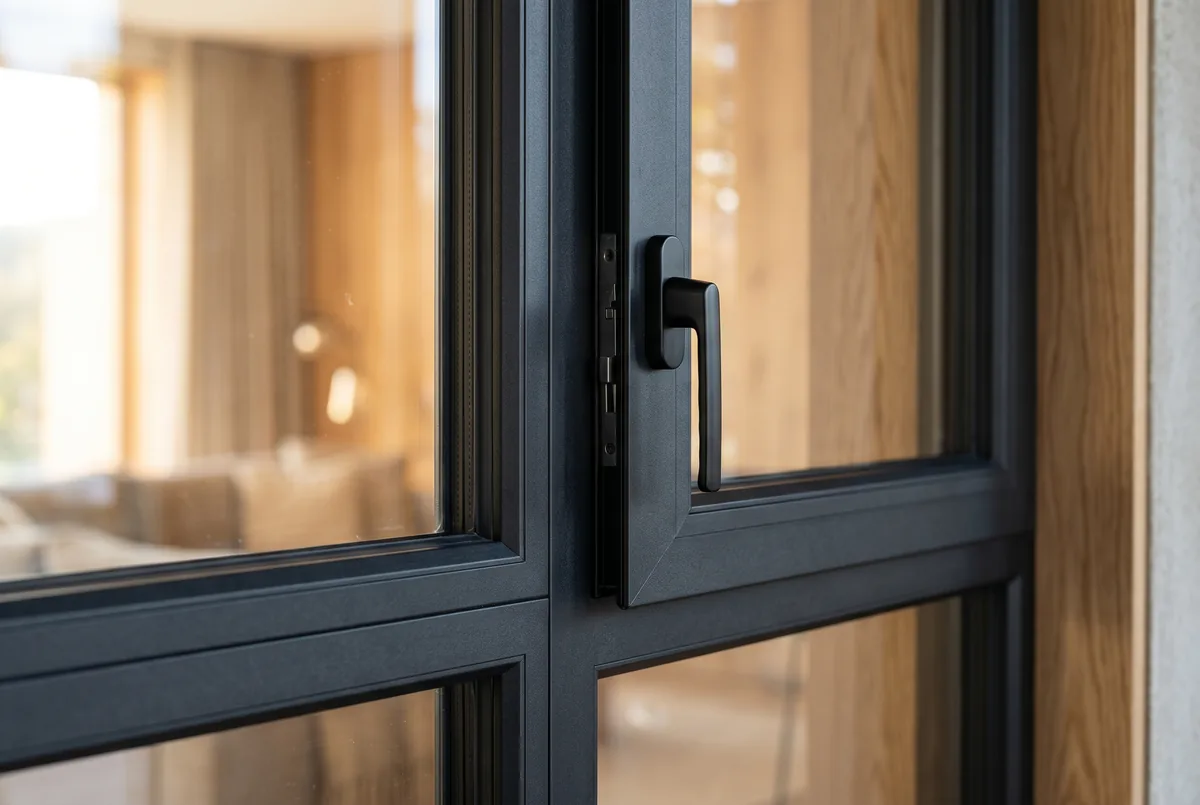
Fading is the most-asked question and the most-misunderstood answer. Black vinyl frames manufactured in 2026 are not the black vinyl frames of 2010. The current generation uses heat-stable pigments certified to AAMA standards for 10-year color retention with delta-E shift below 5, which the human eye registers as no perceptible change. South-facing walls are the worst case; the same windows on a north exposure will look factory-fresh at 20 years.
The warranty picture is where homeowners need to read carefully. Most manufacturers warrant the frame against fading for 10 to 15 years. The fine print usually excludes south-facing or southwest-facing installations, or limits coverage on those exposures to 5 years. Some manufacturers void the entire warranty if the home does not maintain the recommended cleaning schedule. Ask for the warranty document before signing, not after.
Heat absorption matters less than the marketing brochures imply. The frame does heat up, but a modern double or triple-pane glazing package with a low U-value isolates the interior from the frame temperature. The energy penalty for choosing black over white on a properly sealed window is in the range of 1 to 3 percent on whole-window U-value, which is well within the noise of insulation, air sealing, and orientation.
Pro tip
Ask the supplier for the cap-coat material on the exterior of the vinyl frame. PVDF (Kynar 500) is the gold standard and resists fading and chalking the longest. Acrylic cap is a step below but acceptable. Solid-colored vinyl (color through the entire extrusion) is rare for black; check what you are actually buying.
Which black to actually choose
“Black” is a category, not a single color. The four variants we see on GTA orders behave differently on the wall and read differently from the curb.
Matte black. The least reflective. Reads soft and architectural. Hides water spots and fingerprints best. This is the safe default for most homes, and what we recommend on south and west exposures because the matte finish helps suppress heat slightly compared to gloss.
Satin or low-gloss black. A subtle sheen. Reads slightly more “premium” up close but shows water spots more readily. Works well on north and east exposures where the cleaning routine is easier to keep up with.
Gloss black. The most dramatic. Reflects sky and surroundings, which gives the frame a slightly mirrored quality at certain angles. Looks great on contemporary builds with crisp architectural lines. Reads dated faster on traditional homes because the contrast is too sharp against masonry textures.
Charcoal or near-black. Not technically black but reads black from across the street. Slightly more forgiving on heat absorption (a few degrees cooler at peak load) and on fade visibility. A reasonable hedge if you want the look without going fully committed.
Resale impact in the GTA
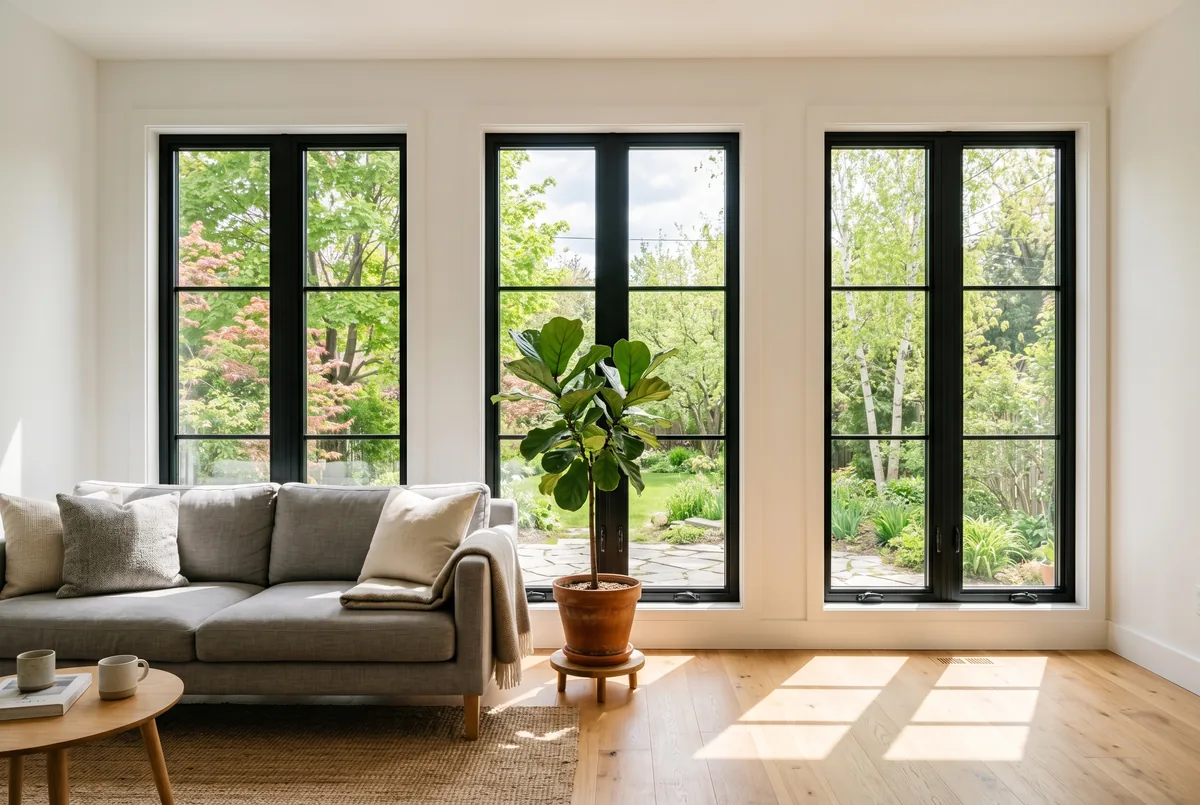
Realtors are the most reliable signal here, and they are unanimous. In the GTA resale market in 2026, homes with black-framed exterior windows are listed and photographed differently than homes with white frames. Listings featuring black windows in MLS photographs draw measurably higher click rates and showing rates, especially in the contemporary and detached-home categories. The pricing premium is hard to isolate because it is bundled with broader curb-appeal investments, but appraisers and stagers consistently treat black-framed exteriors as a positive marker for newer or renovated stock.
The category where black does not help, and may slightly hurt, is heritage districts and older traditional homes. Cabbagetown, Riverdale, parts of Forest Hill, and similar enclaves expect period-correct white or wood frames. A modernized window package on a Victorian reads off and gives buyers reasons to renegotiate. If your home falls in this category, the answer is not “stay with white” by default; it is “stay with what fits the architecture,” which is sometimes white and sometimes a heritage-friendly stained-wood look.
Disclaimer
Recommendations are general guidance only. Confirm window specifications, warranty terms, sizing, and suitability for your home and exposure with a qualified professional before purchase or installation. Trends, costs, and product availability change. ALDA Windows and Doors is not liable for outcomes from actions taken based on this content.
The verdict
Black window frames are still in style for 2027, and they will be in style for 2028 and 2029 too. The category is now the default for new builds and replacements on contemporary and transitional homes across the GTA. The bigger question is which black to choose: matte for forgiving exposures, satin for north and east, gloss for crisp contemporary, charcoal as a softer hedge. Heritage homes are the exception where white or wood remains the right answer.
If you are weighing it for a 2026 or 2027 install, the trend risk is the smallest worry on the list. The bigger risks are warranty fine print on south exposures, the maintenance routine you actually keep, and matching the finish to the architecture. Get those three right and the exterior of the home looks intentional for the next two decades.
See black vinyl windows in person
Our showroom has matte, satin, and gloss black sample frames mounted next to white and bronze for direct comparison.
Book a free GTA design consultationSources and references
- American Architectural Manufacturers Association (AAMA), fenestration testing standards and color retention requirements
- Natural Resources Canada, ENERGY STAR Canada certified windows program
- Canadian Standards Association, CSA Group fenestration product standards