
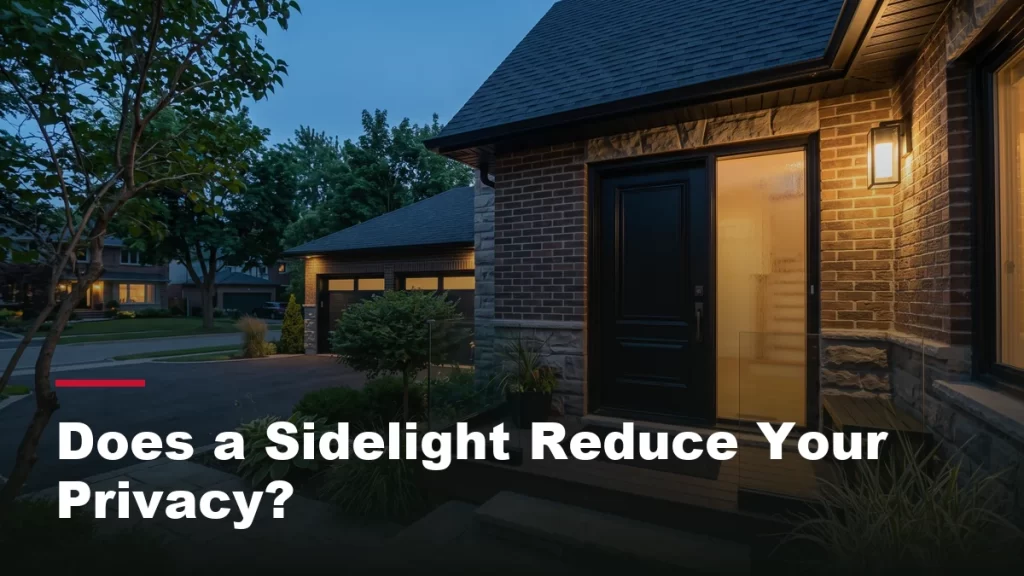
Does a front door with a side window reduce your privacy? It is one of the most common hesitations we hear when a homeowner is deciding between a plain slab door and one with a sidelight, and it is a fair question. A tall pane of glass next to your door is, after all, a pane of glass, and whether a side window costs you real privacy is not a yes or no question. It depends almost entirely on one decision most people do not realize they are making: which glass goes into that opening.
This guide walks through what a side window actually shows from the street, why the side window privacy fear is usually bigger than the reality, the glass options that solve the problem outright, and the specific situations where privacy is a genuine concern worth planning around.
Does a side window really reduce privacy
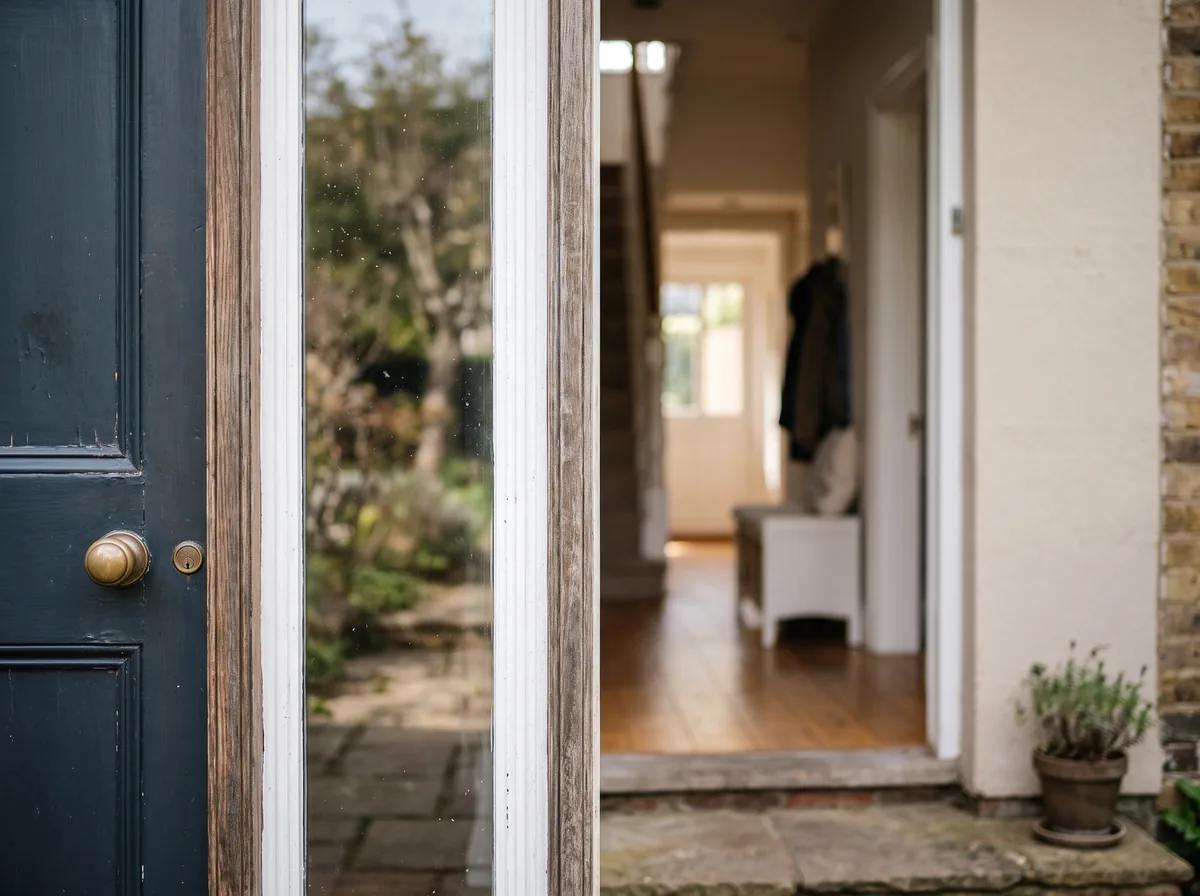
A standard side window, usually called a sidelight, is a narrow vertical pane somewhere between 10 and 14 inches wide, set beside the door slab rather than in it. With clear glass and no window treatment, someone standing close to the door at night with interior lights on can see a narrow vertical slice of whatever is directly behind that glass, typically a foyer or front hallway. During the day, with less light contrast between inside and outside, the same pane shows much less.
That is the honest starting point on side window privacy. A clear sidelight is not a wide window into your living room. It is a narrow strip that shows whatever furniture, artwork, or hallway happens to sit directly in its sightline, and only clearly at night with the lights on.
Why the fear feels bigger than the reality
Most of the anxiety about sidelights comes from imagining someone standing at the door and looking straight through, the way you would look through a regular window. In practice, three things limit what is actually visible.
The angle is narrow
A sidelight is tall and narrow, so the field of view through it is narrow too. Whoever is standing at the door sees a slice of the entryway directly opposite the glass, not a wide view of the room behind it.
Most foyers are not the room you are worried about
The space directly behind a front door is almost always a hallway, closet, or stairwell, not a living room or bedroom. What a sidelight actually exposes is usually the least private part of the house already.
Distance matters more than people assume
Visibility through a narrow pane drops off quickly with distance. Someone at the end of your driveway or on the sidewalk generally sees far less than someone standing directly on the step, which is who the concern is usually really about.
People often ask
“Can someone see my whole living room through the sidelight?” Almost never, unless your living room opens directly onto the front hallway with no wall or furniture breaking the sightline. Walk outside at night with your interior lights on and stand where a visitor would to see exactly what is actually visible from your specific layout, rather than guessing.
The glass options that actually solve it
If a clear sidelight still feels like too much exposure, the fix is almost never removing the sidelight. It is changing the glass. Entry door manufacturers offer several levels of obscured glass built specifically for this.
Every one of these options solves side window privacy at the glass, not at the opening, which is why removing the sidelight is almost never the right fix.
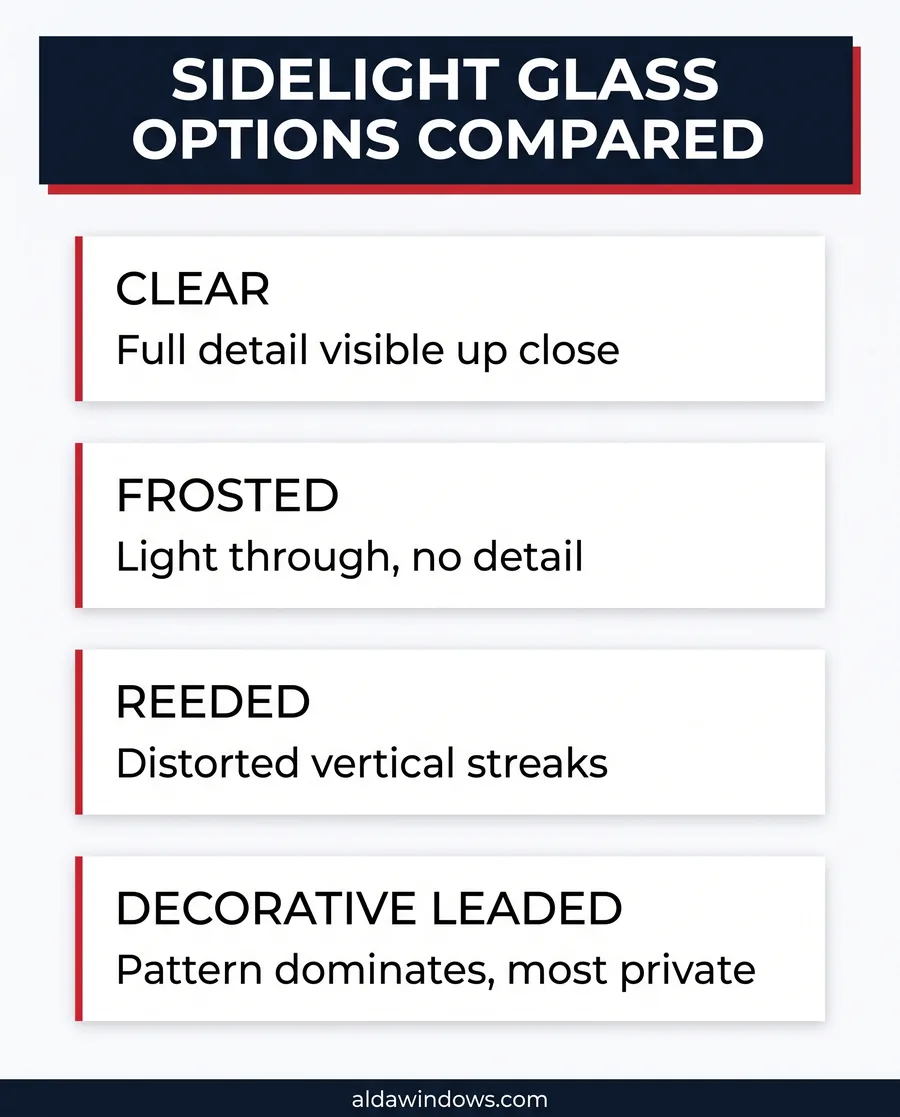
Frosted and satin-etched glass
A uniformly frosted surface that lets daylight through while breaking up any recognizable shape or movement behind it. This is the most common upgrade and the easiest to match across a full door and sidelight set.
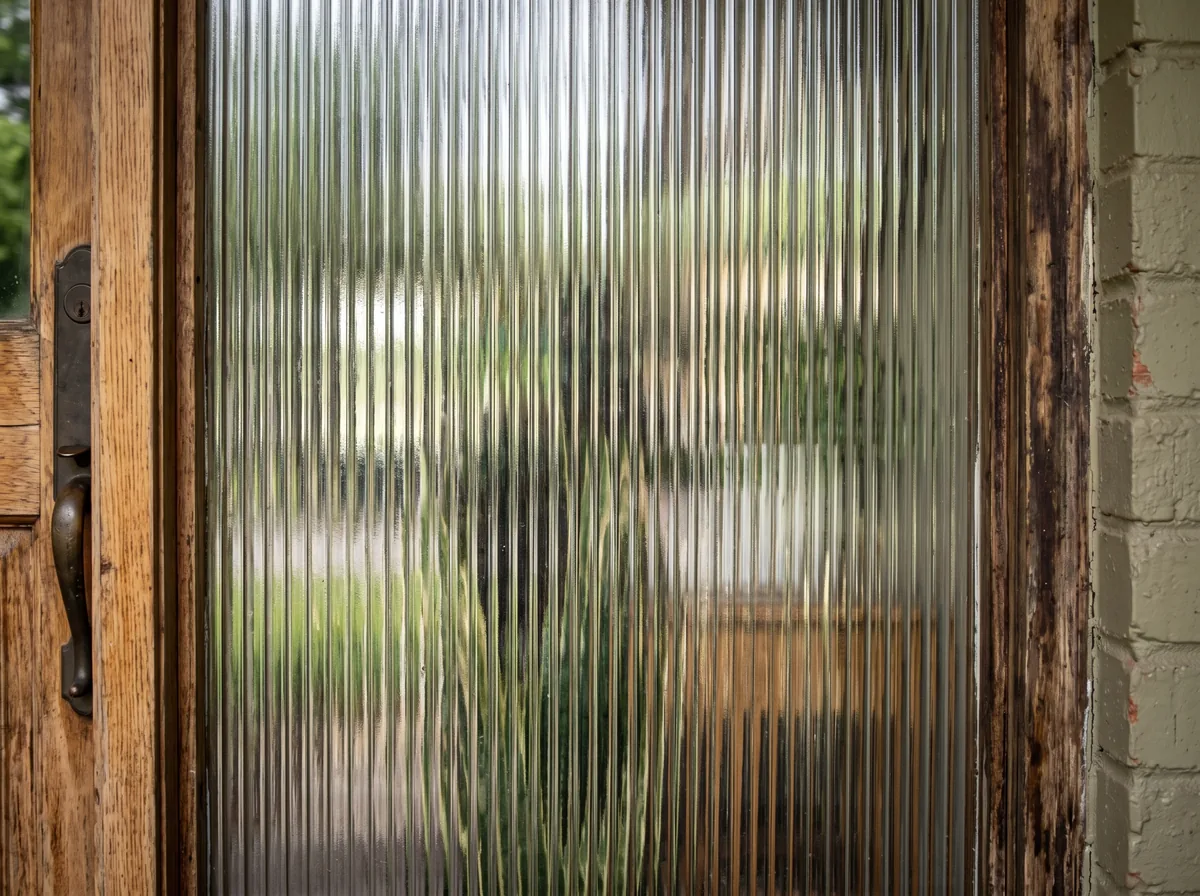
Reeded and textured glass
Glass pressed with a ribbed or rippled texture, which distorts anything behind it into vertical streaks of colour and light. Therma-Tru’s decorative glass lines include several reeded and textured options built specifically for sidelights, and the effect reads as a deliberate design choice rather than a privacy patch.
Decorative leaded and art glass inserts
Patterned glass with leaded caming or an art-glass design typically blocks the most detail of the three options while adding the most visual character. It is also usually the highest cost option, since the pattern itself is part of what you are paying for.
| Glass type | Light transmission | What’s visible from outside |
|---|---|---|
| Clear | Full | Shapes, movement, and detail at close range |
| Frosted / satin | High | Light and vague movement only, no detail |
| Reeded / textured | High | Distorted vertical streaks, no recognizable shapes |
| Decorative leaded | Moderate | Pattern dominates; almost no interior detail |
When side window privacy is a genuine concern
There are a handful of situations where side window privacy is not an overblown concern, and it is worth naming them directly instead of pretending every sidelight is risk-free in every layout.
- Ground-floor homes set close to a sidewalk, where pedestrians pass within a few feet of the door regularly.
- A sidelight that lines up with a stairwell or an open living space, rather than a closed hallway.
- Homes with the front door lit brightly at night while the street is darker, which increases visibility from outside in.
- Corner lots or homes near a bus stop or school, where more people stand near the door for longer stretches of time.
If more than one of these describes your home, obscured glass is worth planning for at the design stage rather than adding a window film later as a patch.
Pro tip
If security is part of the concern and not just visual privacy, ask your installer about laminated glass options for the sidelight, not just obscured glass. Laminated glass holds together when struck instead of shattering outward, which is a separate benefit from privacy and worth asking about specifically if it matters to you.
What to do about it
If you already have a side window and it feels too exposed, you have options short of replacing the whole unit.
- Apply a privacy window film designed for glass doors, which is generally the fastest and least expensive fix for an existing clear sidelight.
- Add interior window treatments built specifically for narrow sidelight openings, such as cellular shades or café-style curtains on a tension rod.
- Reglaze the sidelight with an obscured insert if the frame and opening allow it, which keeps the daylight without replacing the whole door unit.
- Choose obscured glass upfront if you are ordering a new door, since it typically costs less to specify at order time than to retrofit later.
None of these require giving up the sidelight itself, which is usually the part homeowners are most reluctant to lose. The sidelight is what makes a front hallway feel bright instead of cave-like. Privacy is a glass decision, not a keep-it-or-lose-it one.
Good to know
This article describes how sidelight glass options generally perform. Actual visibility depends on your home’s specific layout, lighting, and the exact glass installed. If security, not just visual privacy, is a concern for your property, speak with a qualified installer or a security professional about your specific situation. ALDA Windows and Doors is not responsible for decisions made solely on the basis of this article.
Download the free quick guide
A one-page comparison of clear, frosted, reeded, and decorative sidelight glass to bring to your next consultation.
Frequently asked questions
Can people see into my whole house through a front door sidelight?
In almost every layout, no. A sidelight is a narrow vertical pane, so the field of view through it is narrow too, and it typically shows only whatever is directly behind the glass, most often a front hallway rather than a living space. Visibility is also much lower during the day than at night with interior lights on, since there is less contrast between inside and outside. The clearest way to know for certain is to stand outside your own door at night and see what is actually visible from your home’s specific layout.
What is the difference between frosted and reeded sidelight glass?
Frosted glass has a uniform matte surface that scatters light evenly and blocks recognizable detail while still letting daylight through. Reeded glass is pressed with a ribbed or rippled texture that distorts anything behind it into vertical streaks rather than an even blur. Both block a similar amount of detail. The choice usually comes down to appearance: frosted reads as clean and modern, while reeded adds visible texture and movement to the glass itself.
Does obscured glass cost more than clear glass for a sidelight?
Generally yes, though the difference varies by manufacturer and by which obscured pattern you choose. Frosted and satin-etched glass tend to be the least expensive step up from clear. Decorative leaded or art-glass inserts, which add a full pattern rather than just obscuring the view, are typically the most expensive option. Ask your installer for exact pricing on your specific door and sidelight combination, since the base door cost and the glass upgrade are usually quoted separately.
Can I add privacy film to an existing sidelight instead of replacing the glass?
In most cases, yes. Privacy window film is designed to apply directly to existing glass and is generally the fastest and least expensive way to add privacy to a sidelight you already have, without replacing the unit. It will not match the exact look of factory obscured glass, but it solves the visibility concern. If the glass itself needs replacing for other reasons, reglazing with a factory obscured pane is usually the better long-term choice.
Is a sidelight a security risk, or just a privacy one?
Security depends on the glass type, framing, installation and its position relative to the lock. Obscured glass improves privacy but is not automatically impact-resistant; ask about laminated or security-rated glazing where forced-entry resistance matters
What to do next
- Stand outside your own front door at night with the interior lights on and see exactly what is visible, rather than guessing.
- If it feels too exposed, ask about frosted or reeded glass options before assuming the sidelight itself has to go.
- If security is part of the concern, ask specifically about laminated glass, which is a different feature from obscured glass.
Side window privacy comes down to one decision: the glass, not whether you have a sidelight at all. ALDA fits side window glass to match the privacy and light a home actually needs across Etobicoke, Markham, and Brampton. You can request a free estimate and walk through the glass options against your own front entry.