
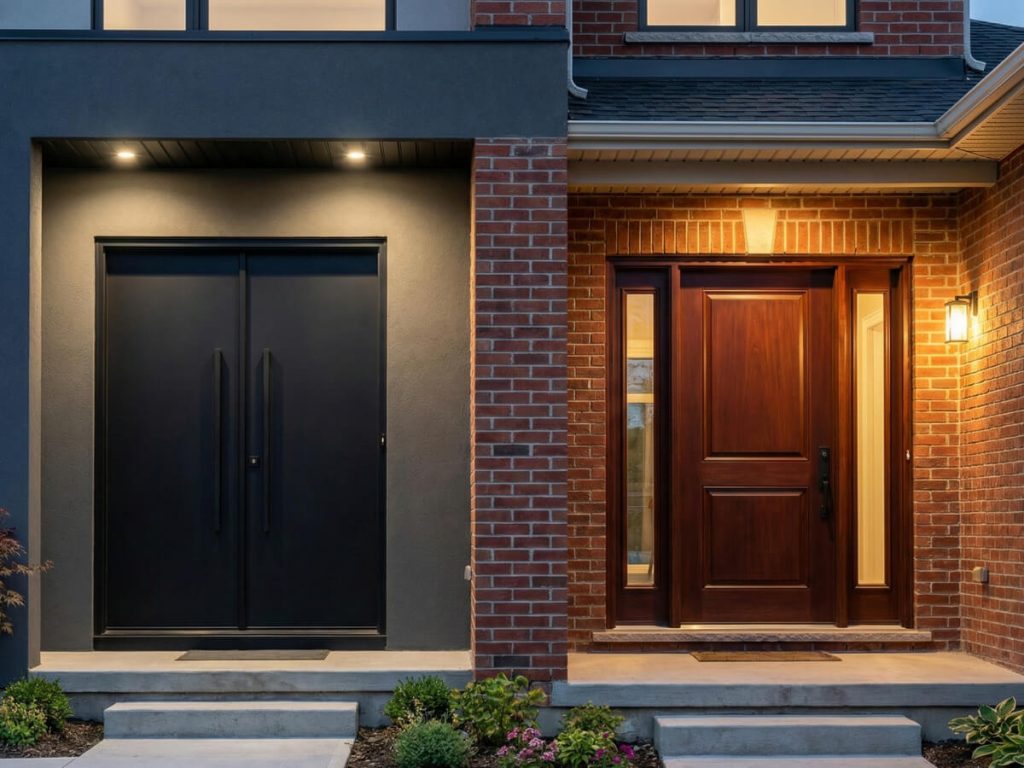
You’ve got a rough opening between 5 and 6 feet wide. That’s the “Goldilocks” zone of entryways too big for a standard door, but often a tight squeeze for grand double doors.
Right now, you’re likely staring at your entryway (or a blueprint) debating between the classic elegance of Double Doors and the modern brightness of a Single Door with Sidelites.
I see this debate play out with homeowners in the GTA constantly. Everyone loves the idea of double doors swinging open like a movie scene. But in reality? The decision comes down to three boring-but-crucial factors: air sealing, actual walk-through width, and security.
Let’s break down exactly which configuration belongs in your home, moving past the brochure photos and looking at how these doors actually live.
The “Rough Opening” Reality Check
Before we talk style, let’s talk math. This is where most homeowners get tripped up.
If you have a 5-foot (60-inch) opening, double doors are risky. You would be forced to use two 28-inch or 30-inch doors.
The problem: A 30-inch door feels narrow. While it technically functions, accessibility guidelines and standard building practices generally recommend wider clear openings for main entrances to ensure comfortable passage. If you are carrying groceries or a gym bag through a 30-inch gap, you might find yourself bumping your shoulders.
The Verdict: For 5-foot openings, a Single Door (36″) with two narrow sidelites (10-12″) usually looks balanced and functions better.
If you have a 6-foot (72-inch) opening, you have true freedom.
- You can fit two full-sized 34-inch or 36-inch doors.
- Or, you can do a generous single door with two wide, light-filled sidelites.
Now, let’s look at the pros and cons of each setup.
Option A: Double Doors (The “French Door” Style)
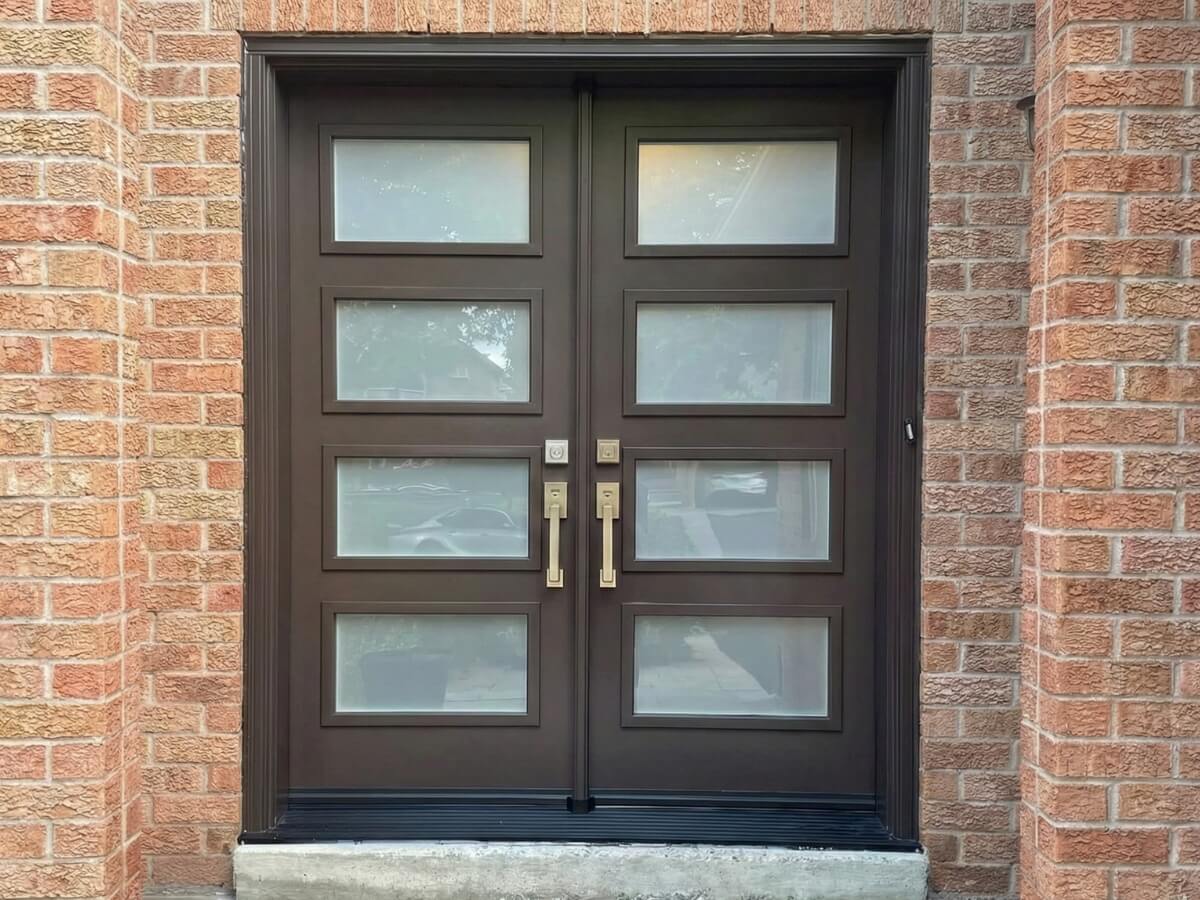
Double doors are the definition of curb appeal. They create a focal point that says “grand entrance.” But they come with maintenance realities you need to know about.
The Pros
- Moving Day Hero: Need to get a new sectional sofa or a grand piano into the house? Open both leaves, and you have a massive 60-70 inch clear opening. Nothing beats this access.
- Symmetry: For traditional or colonial-style homes, the symmetry of double doors is unmatched visually.
The Cons (The “Expert Insight”)
- The Sealing Struggle: This is the biggest factor for Canadian homes. Double doors seal against each other in the middle, rather than against a fixed frame. While modern astragals (the strip in the middle) are good, they are generally less airtight than a single door. In a high-wind rainstorm, double doors are more prone to draft issues common in Toronto homes.
- The “Active” vs. “Passive” Door: 95% of the time, you will only use one side (the active door). You are paying for two doors but only using one.
- Security: Because the locking point is in the center (where the two doors meet), it is structurally weaker than a deadbolt thrown into a solid wood jamb. You need high-quality multi-point locking hardware to mitigate this.
Pro Tip: If you choose double doors, ensure you get a Multi-Point Locking System. This secures the door at the top, middle, and bottom, warping the door tight to the frame and significantly improving energy efficiency.
Option B: Single Door with Sidelites
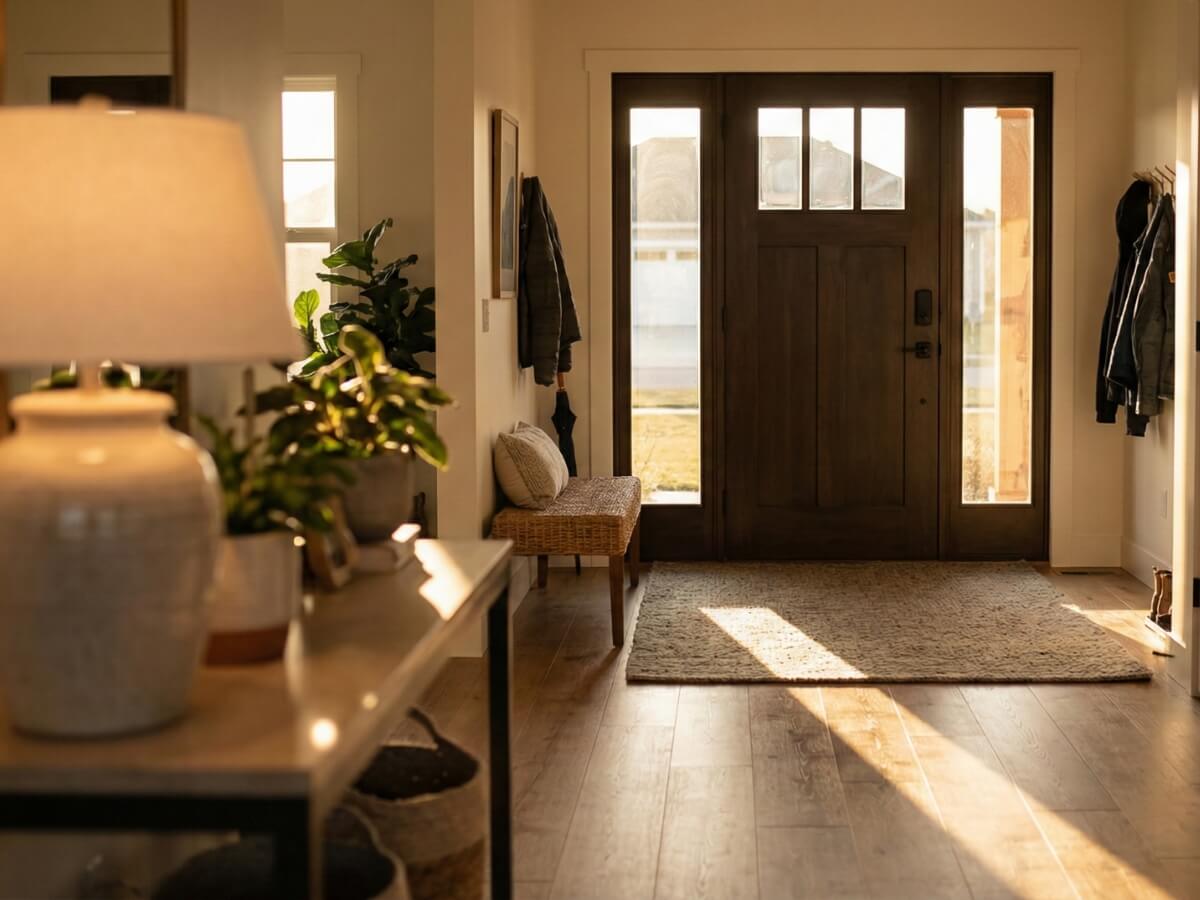
This configuration involves one standard operating door (usually in the center) flanked by vertical glass panels on one or both sides.
The Pros
- Superior Weatherproofing: The door closes against a solid, fixed jamb. This creates a much tighter compression seal. If your front door faces North or takes a beating from the wind, this is the superior technical choice.
- Natural Light: Sidelites generally offer more glass surface area than the small inserts found in double doors. If you want a bright foyer, this is the way to go.
- Cost Effectiveness: Generally, one door slab + glass is cheaper than two fully finished door slabs. You also save on hardware since you only need one handle set.
The Cons
- Fixed Width: Your passage width is limited to the size of the single door (usually 36 inches). That sofa we mentioned earlier? It might not fit.
- Privacy: More glass at eye level means you need to consider privacy glass (frosted, rain, or textured) so delivery drivers aren’t looking straight into your living room.
The “Tie-Breaker” Factors
Still undecided? Here is how I help clients make the final call.
1.The Foyer Size
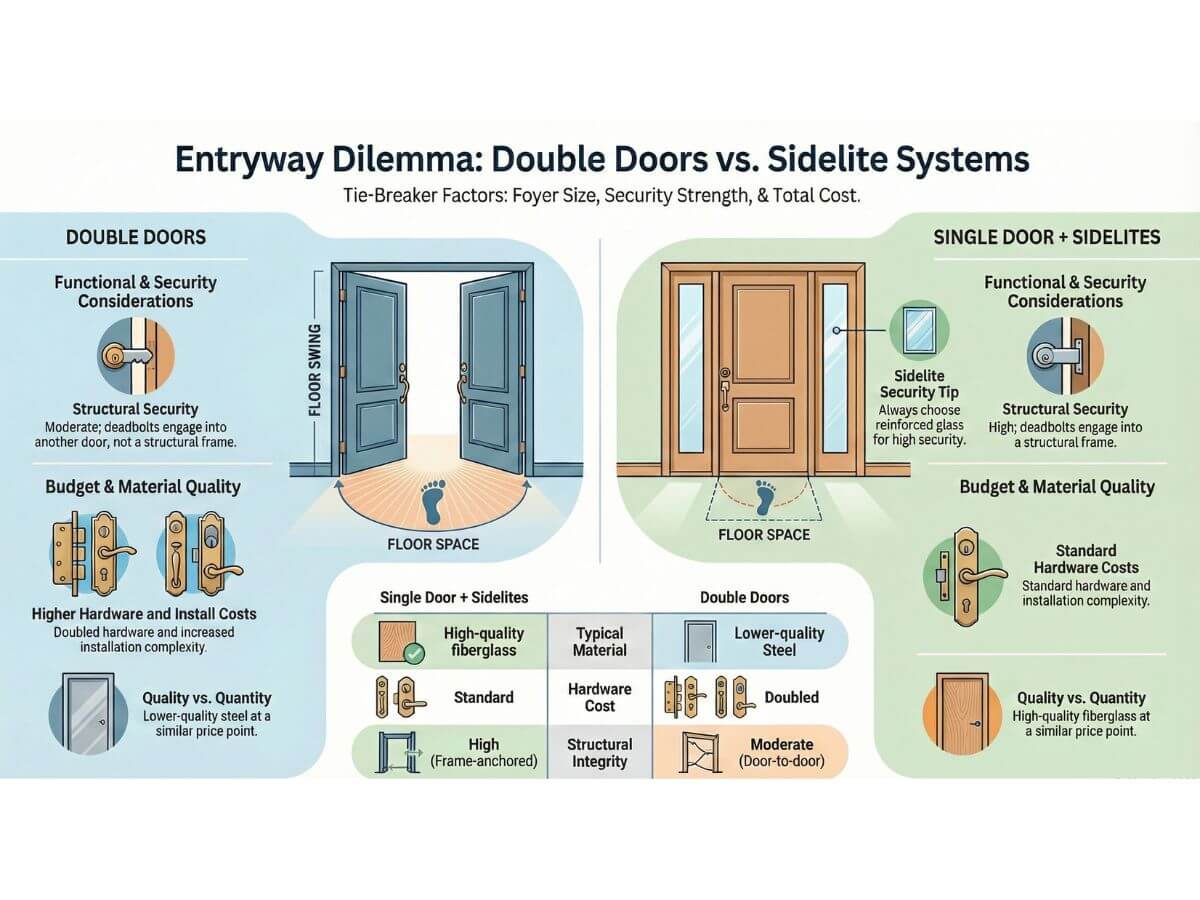
If your interior entryway is small or has a staircase immediately in front of the door, avoid double doors. When the inactive door is pinned shut, it’s fine. But when you open both, they swing inward and eat up a huge amount of floor space. Sidelites don’t swing; they save space.
2.Security Concerns
If security is your #1 priority, the Single Door with Sidelites wins. A deadbolt engaging into a structural frame is inherently stronger than one engaging into another door leaf. However, be sure to choose reinforced glass for the sidelites.
3. The Price Tag
Double doors essentially double your hardware costs and often increase the installation complexity. If you are working with a strict budget, a Single Door with Sidelites often gives you a higher quality fiberglass slab for the same price as two lower-quality steel double doors.
Which One Wins?
Here is the verdict:
- Choose Double Doors If: You have a full 6-foot opening, you prioritize aesthetic symmetry over absolute energy efficiency, and you have a large interior foyer to accommodate the door swing.
- Choose Single Door + Sidelites If: You have a 5-foot opening (it will look less cramped), you live in an exposed area with harsh weather (better sealing), or you crave natural light in your hallway.
At ALDA Windows and Doors, we customize both options to fit your exact rough opening. Whether you need the grandeur of double steel doors or the efficiency of a fiberglass system with sidelites, we ensure the installation is airtight.
Ready to transform your entryway? Contact us today for a free consultation, and let’s measure that opening together.