
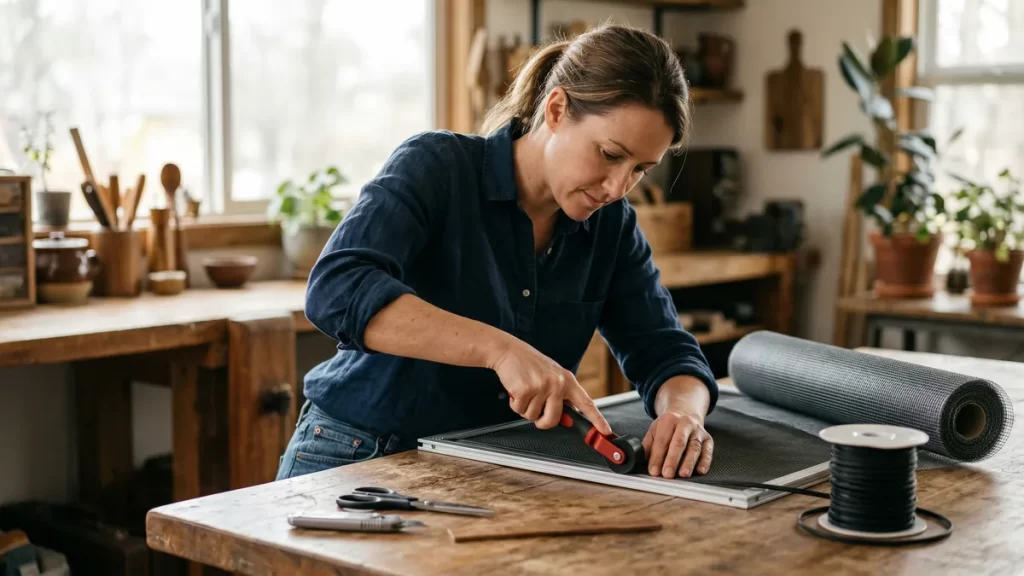
Window screens are the part of the window most homeowners notice last and replace least. They tear, sag, discolour, and develop pinholes that let in the entire mosquito population of the GTA, and most people live with the damage for years before doing anything about it. The fix is usually cheaper than people think often under $40 in parts for a DIY re-mesh but knowing what you actually have is the difference between a 30-minute project and a frustrating weekend. If your screens are part of a larger window problem, our window replacement service handles full screen rebuilds as part of the project, but for healthy windows you can almost always handle screens yourself.
This guide walks through how to diagnose what is wrong, how to decide between repair and replacement, what the different mesh and frame options actually do, and the right way to size a replacement if you go that route. By the end you will know exactly what your screens need.
Diagnose what is actually wrong
Pull the screen and lay it flat on a table. Run your hand across the mesh. There are six common failures: torn mesh, sagging or stretched mesh, pinholes from age and UV, a bent or twisted aluminum frame, a dried-out spline (the rubber cord that holds the mesh in the frame channel), or broken corner clips. The first three are mesh problems and the screen can be re-meshed. The last three are frame problems and the whole screen may need to be rebuilt or replaced.
Take a photo of the screen and note the dimensions of the frame opening to the nearest millimetre. You will need this information whether you DIY or order a replacement.
When a re-mesh is the right call
If the aluminum frame is straight, the corner clips are intact, and the spline channel is clean, a re-mesh is the right answer. Cost in parts: $15 to $30 per screen. Tools needed: a spline roller (about $8) and a utility knife. Time: 20 to 30 minutes per screen for a first-timer, 10 minutes once you have done a few. The result is indistinguishable from a brand-new screen.
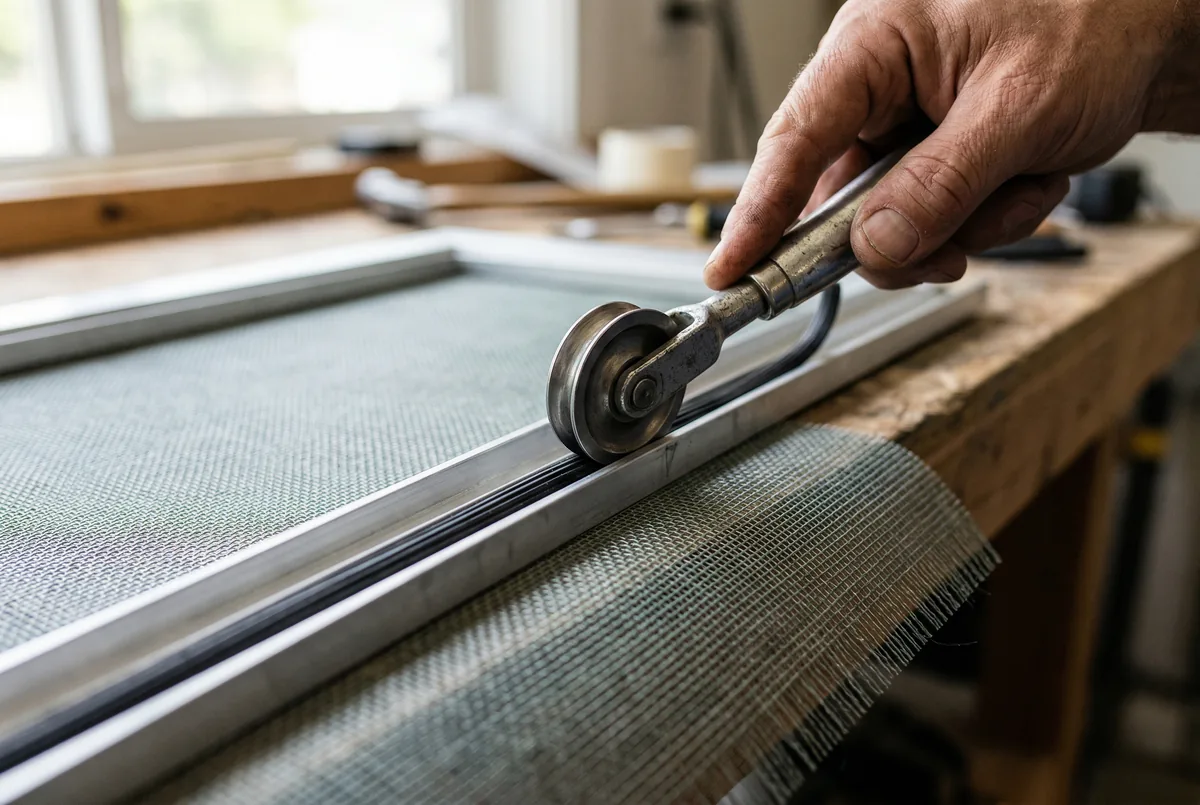
Pry out the old spline with an awl or flat-head screwdriver, lift out the old mesh, lay the new mesh over the frame with about 25 mm of overhang on each side, press the new spline into the channel with the roller working from one corner around, and trim the excess mesh with the utility knife held flat against the spline. Three things matter: do not stretch the mesh as you go (let the spline pull it tight), keep the corners square, and use a spline diameter that matches the channel.
When the whole screen has to go
If the frame is bent or twisted, the corner clips are broken, or the spline channel itself is damaged, you have a frame problem. You can buy replacement aluminum frame stock, mitre it, install new corner clips, and rebuild the screen but for a single screen, by the time you have bought the frame stock and the corner clips and the mesh and the spline, you are within $10 of a new pre-built screen from your window manufacturer. Order the replacement and re-do the time you would have spent on the rebuild.
If your window is from a major GTA brand (Vinyltek, North Star, Centennial, Gentek, Strassburger, Pollard, Energy Brand, ALDA), the manufacturer will sell you a pre-built replacement screen sized to your window if you give them the window serial number from the spacer between the panes. Lead time is usually 1 to 2 weeks and the cost is typically $45 to $90 per screen.
Mesh types and when to use them
Standard fibreglass mesh (the grey or charcoal mesh on most windows) is the default. It is cheap, soft, easy to work with, and lasts about 8 to 12 years in the GTA before UV breaks it down. Buy charcoal grey rather than silver it is much easier to see through.
Aluminum mesh is more durable but tougher to work with and shows dents and creases permanently. Use it for screens that take physical contact, basement windows that get bumped by lawn equipment, or any screen at child-height that is regularly pushed.
Pet-resistant mesh is a heavy-duty vinyl-coated polyester about seven times stronger than standard fibreglass. Worth the upgrade ($30 to $50 in mesh per screen) for any household with cats or dogs that lean on screens.
No-see-um mesh is woven much tighter than standard mesh and stops blackflies and the smallest biting insects in addition to mosquitoes. Worth specifying for cottages and for properties near ravines or wet areas in the GTA. The trade-off is reduced airflow.
Solar mesh blocks 70 to 90 percent of UV and significantly reduces summer cooling load on south- and west-facing windows. The exterior view is dimmer but the interior view is unaffected. A solid choice for west-facing rooms that overheat in July and August.
Retractable and magnetic screens
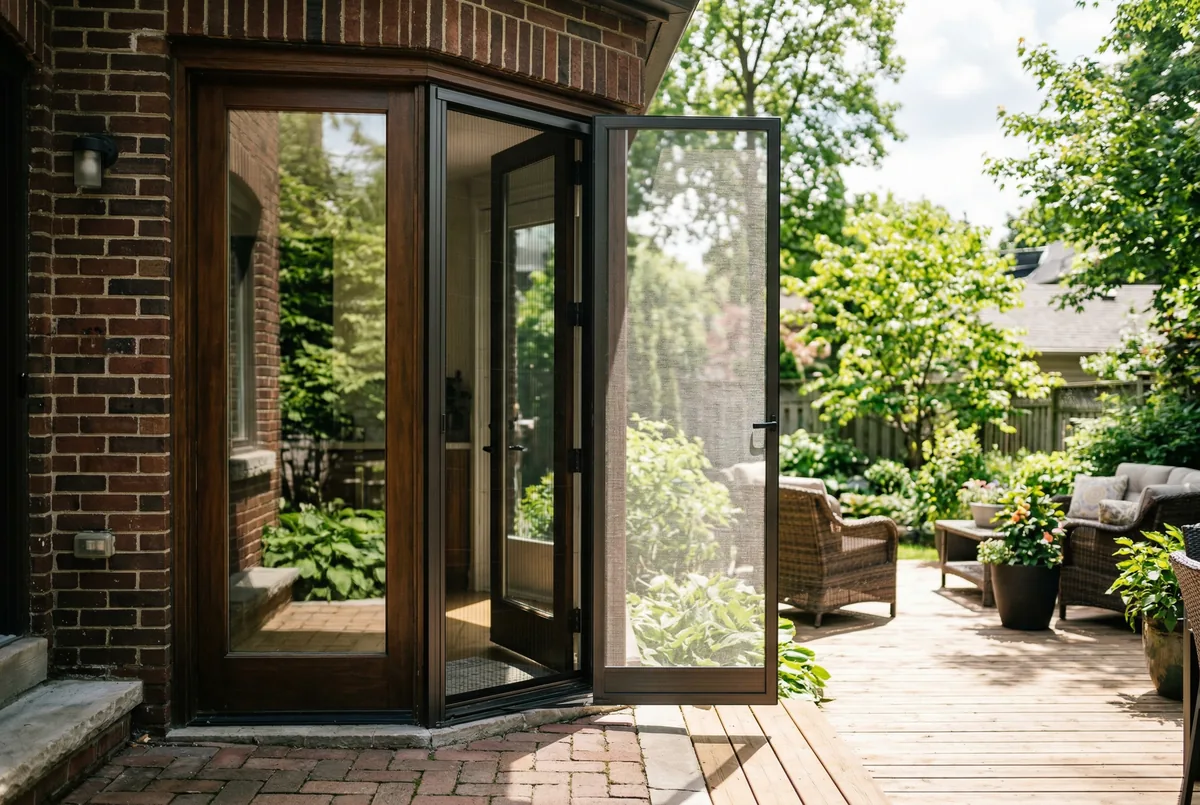
Retractable screens roll up into a discreet housing along the top or side of the window or door when not in use. They are ideal for casement windows where the screen sits inside the room (because the sash swings out) and for patio doors where a fixed screen would block the view all winter. Cost installed: $250 to $500 per opening for a window, $400 to $800 for a patio door. They need professional installation but the durability is excellent.
Magnetic screens are a budget option for screen doors only two halves of mesh held together by a strip of magnets in the middle. They cost $25 to $50, install with adhesive strips, and last one to three seasons. Fine for a rental or a temporary fix. Not a long-term solution.
How to size a replacement screen
Measure the screen frame opening (not the screen itself) at three points horizontally and three points vertically. Use the smallest number in each direction. Subtract 3 mm from each dimension to allow for clearance and frame tolerance.
When ordering from a manufacturer, also note: the screen colour (almond, white, brown, black), the channel side (interior or exterior screen), the spline diameter (most are 0.155 inch or 4 mm), and any pull tabs or finger holes you want included. Send a photo of the existing screen with your order to avoid mismatches.
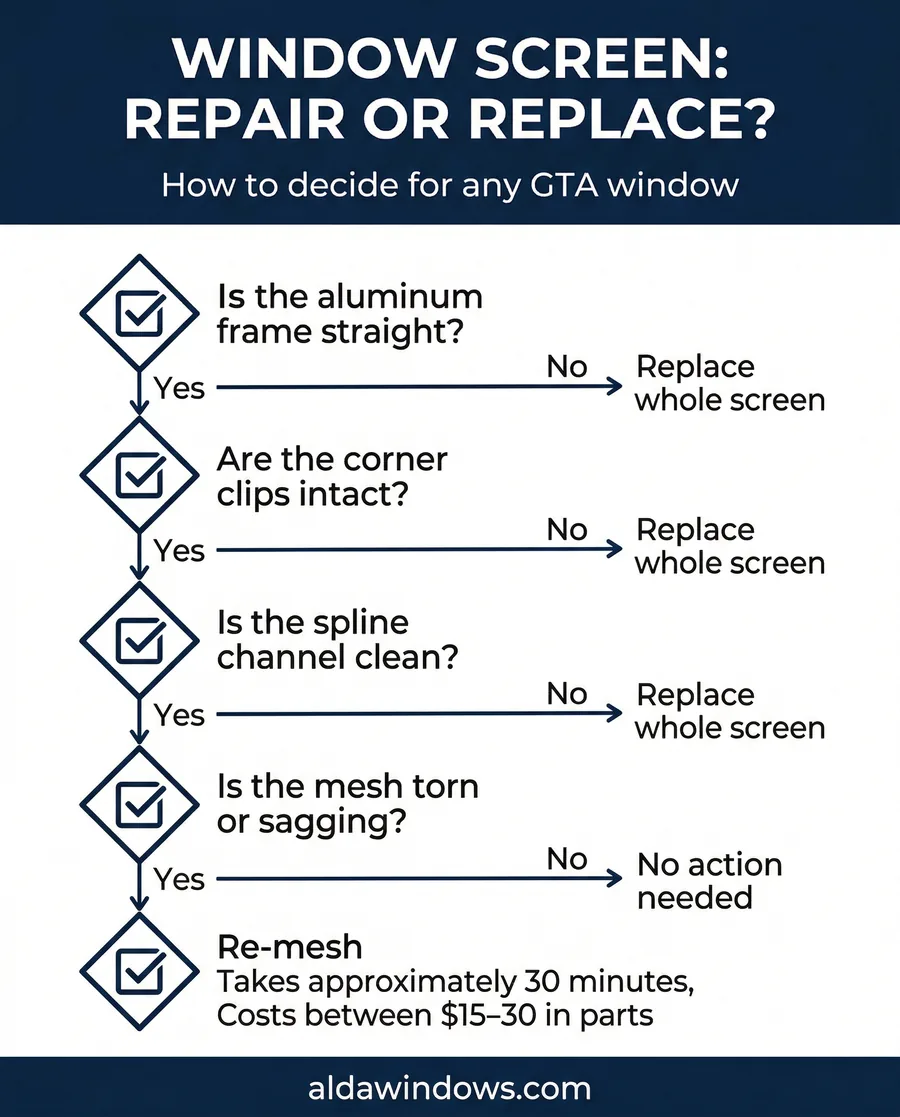
Save this as a PDF and keep it on hand for your project planning.
Download: Window Screen Repair vs Replace GuideFrequently asked questions
How long do window screens last in Toronto?
Standard fibreglass mesh lasts 8 to 12 years in the GTA before UV makes it brittle and prone to tearing. Aluminum frames last much longer often 25 years or more, so most screen failures are mesh problems on a still-healthy frame, which is good news for the wallet.
Can I replace just the mesh on my window screen?
Yes, in most cases. If the aluminum frame is straight and the corner clips are intact, a re-mesh is a 20 to 30 minute DIY job using $15 to $30 in materials and a spline roller. Pry out the old spline, replace the mesh, roll in new spline, trim the excess.
What is the best mesh for a household with pets?
Pet-resistant vinyl-coated polyester mesh – about seven times stronger than standard fibreglass. It costs $30 to $50 in mesh per screen versus $5 to $10 for standard, and it survives cats and dogs that lean on screens. Worth the upgrade for any animal household.
Are retractable screens worth the extra cost?
Yes for casement windows where the screen would otherwise sit inside the room, and yes for patio doors where you want an unobstructed view in winter. They run $250 to $500 per window opening and $400 to $800 per patio door installed, and they last 15 years or more with normal use.
How do I order a replacement screen from my window manufacturer?
Find the window serial number on the spacer bar between the glass panes (look for a sticker or laser etching). Contact the manufacturer directly with the serial, the screen frame opening dimensions, and a photo of the existing screen. Lead time is usually 1 to 2 weeks at $45 to $90 per screen.
Talk to ALDA about your windows and doors
ALDA Windows and Doors has been replacing windows and doors across Toronto and the Greater Toronto Area since the early 2000s. Free in-home assessments, transparent quotes, and a permanent crew that does the installs themselves rather than subcontracting.
Request a free estimate or call us to book a no-pressure consultation.
Note: All prices provided in this article are approximate and may vary based on scope, materials and parts required- contact us for an accurate quote and diagnosis.