
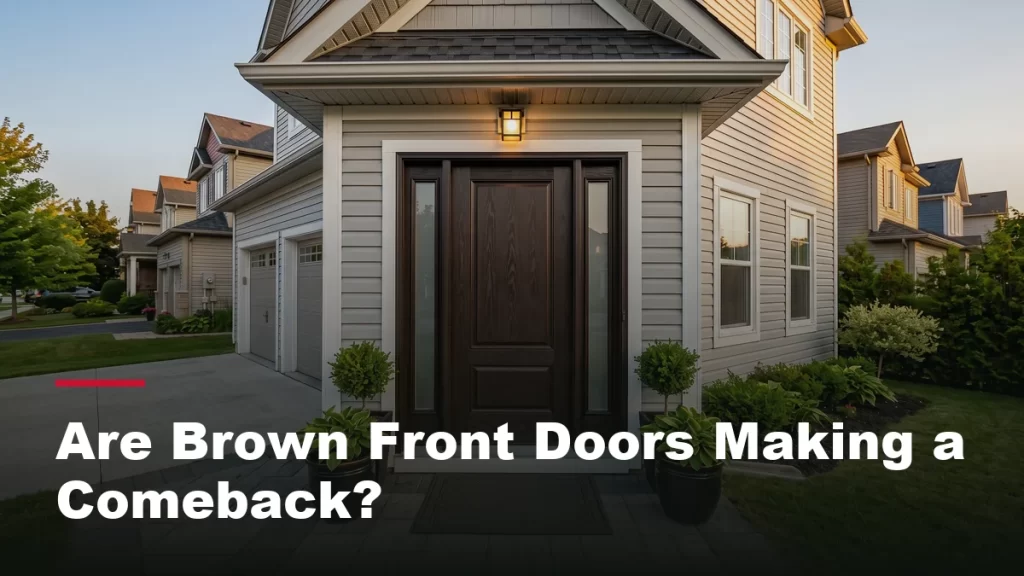
Picture the last few driveways you walked past on an evening walk. Chances are at least one had a front door that was not black and not the builder-grade white it probably shipped with. It was brown, a warm honey tone or a deep near-black espresso, sitting against brick or siding in a way that looked deliberate rather than default. Brown front doors spent a long stretch out of the entry door conversation while black had its moment, and now it is back on enough GTA streets that it is worth asking whether that is a real shift or a passing look.
The honest answer is a bit of both. Brown never actually left the product lineup, it just stopped being the loud choice while black and near-black grey took over curb appeal photos for a few years. What has changed is which brown people are asking for, and why.
Why brown faded, and why it is back
For the better part of a decade, black and charcoal front doors dominated renovation photos, curb appeal features, and the sample boards installers carried to consultations. Black reads as modern and high-contrast against almost any siding colour, which made it an easy universal recommendation. Brown, by comparison, got treated as the safe, slightly dated option, the colour a door came in before anyone thought to change it.
The shift back is coming from two directions at once. Warm, natural material palettes are back in exterior design generally, showing up in stone selections, wood accents, and warmer siding tones, and a flat black door can look stark against that palette in a way it did not against the cooler greys that were popular a few years ago. At the same time, some homeowners who installed black doors during that stretch are now looking for something that reads as warm rather than severe on their next replacement. That is the real shift behind the brown front door comeback: less a single trend and more a return to warmth across the whole exterior.
Did you know
Colour trends in exterior doors tend to run several years behind interior paint trends, since a front door is a bigger commitment than a wall and homeowners replace doors far less often than they repaint a room. What looks like a sudden brown comeback is really the tail end of a warm-tone shift that started inside the home years earlier.
The three browns actually trending
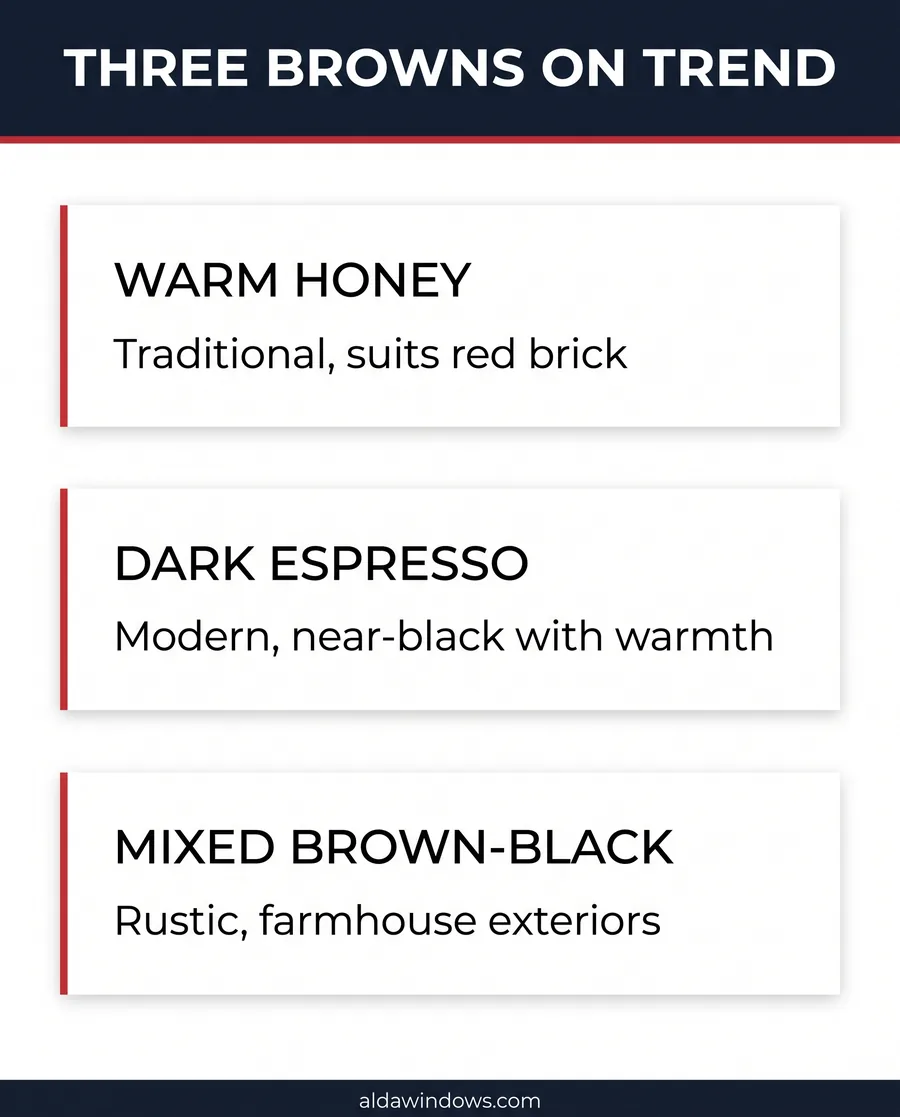
“Brown” is doing a lot of work as a single word. When ALDA customers ask for a brown front door, they are almost always describing one of three distinct looks.
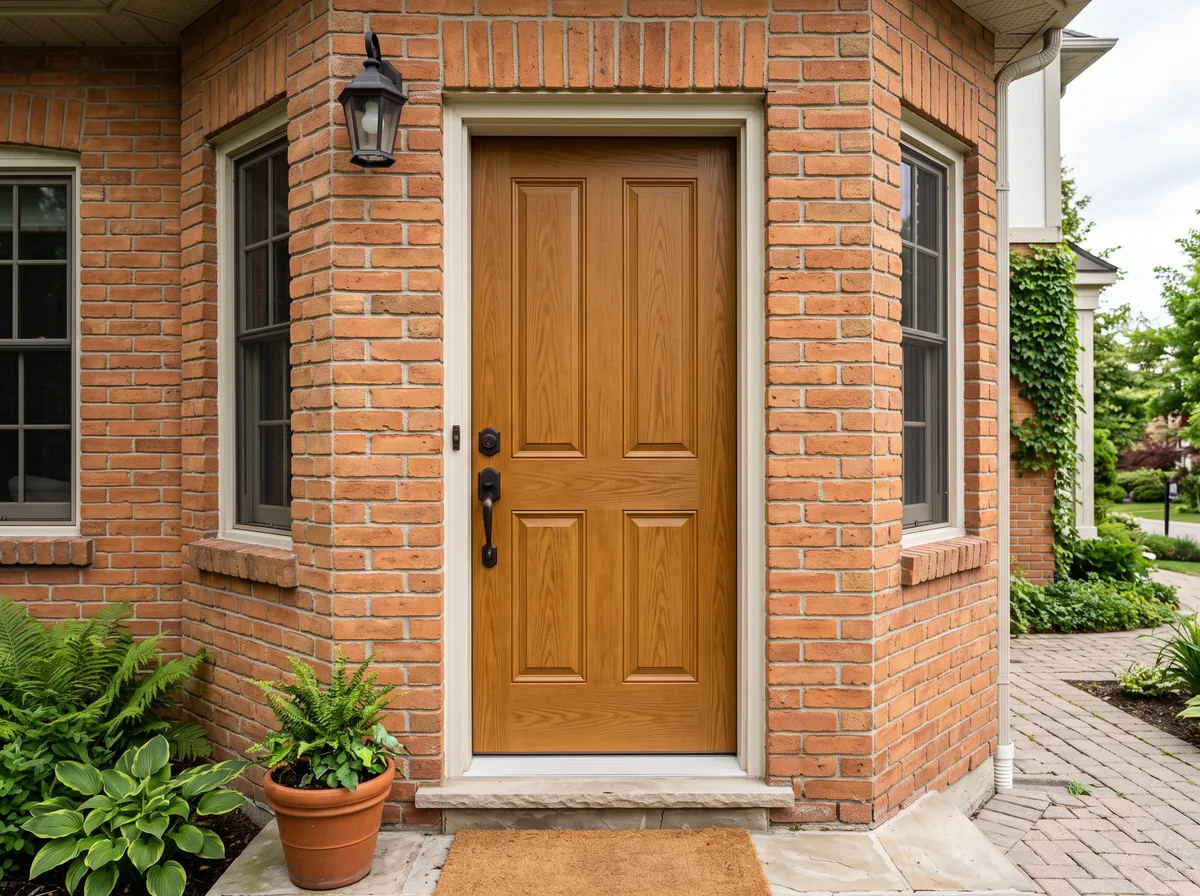
Warm honey and caramel tones
The lightest of the three, closer to a natural wood-grain fiberglass finish than a paint colour. It reads as traditional and works well against brick, especially the orange-toned brick common on older Toronto and Etobicoke homes, where a black door can fight the brick rather than complement it.
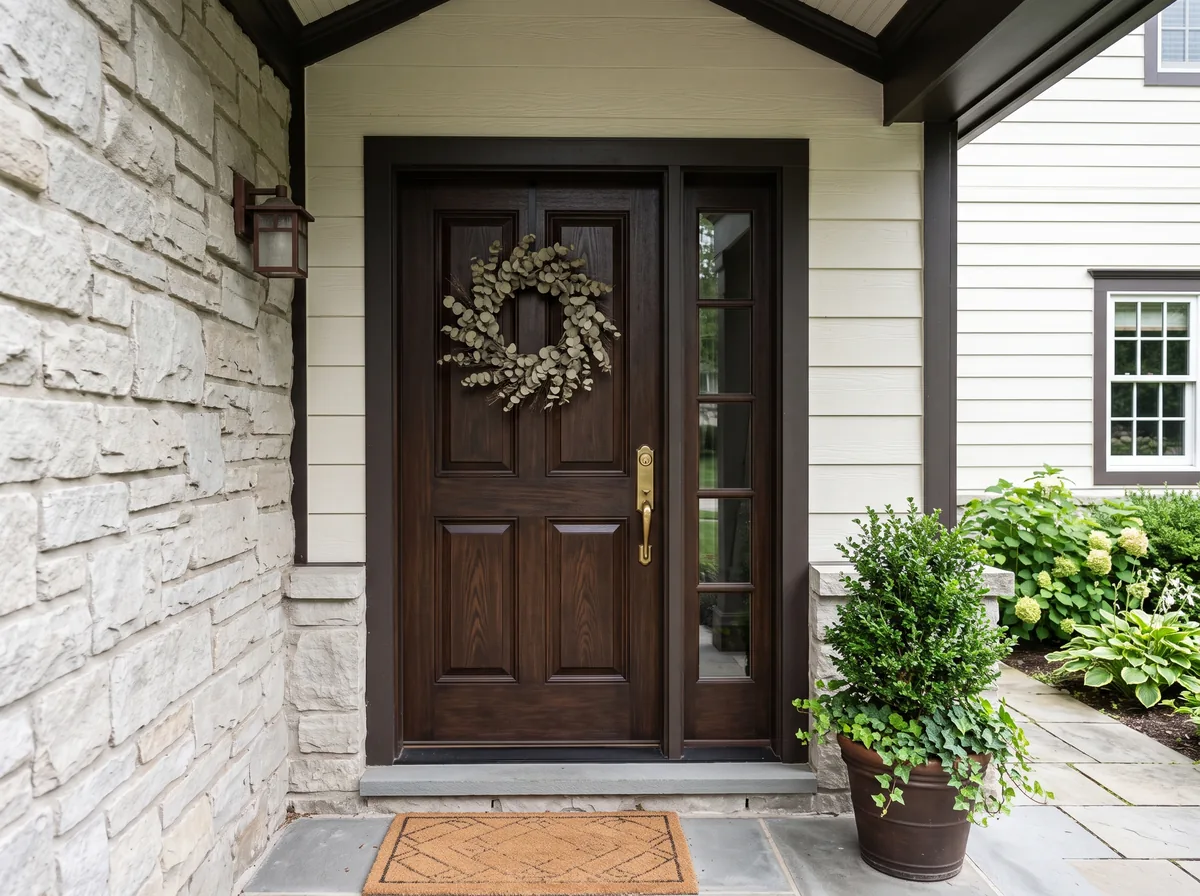
Dark espresso and chocolate
The most requested of the three right now. Dark enough to read as nearly black from across the street, but with a visible warmth up close that a true black finish does not have. This is the tone behind most of what people mean when they say brown is back.
Mixed brown-black and weathered finishes
A newer request, mostly on doors with a wide sidelite, where the finish is intentionally uneven, closer to a weathered barn wood look than a uniform paint colour. It suits a modern farmhouse exterior and is the least common of the three on a standard suburban street.
| Brown tone | Reads as | Suits |
|---|---|---|
| Warm honey / caramel | Traditional, natural material | Orange or red brick, wood accents |
| Dark espresso / chocolate | Modern, near-black with warmth | Grey or beige siding, stone |
| Mixed brown-black / weathered | Rustic, intentionally uneven | Farmhouse or board-and-batten exteriors |
Which brown front door tone suits your exterior
The exterior almost always decides which brown front door tone actually works before personal taste does, and this is where a lot of online colour advice falls apart, because it never accounts for what the door is standing next to.
Red and orange brick pulls warmth out of a door colour, so a dark espresso brown often looks closer to black once it is installed next to that brick than it did on a sample chip in a showroom. A honey or caramel tone tends to hold its own warmth better in that setting. Grey and beige siding is more forgiving and works with either end of the brown range. Stone exteriors, increasingly common in Vaughan and Richmond Hill new builds, tend to favour the darker espresso tones, which read as intentional rather than dated against a cooler stone palette.
Pro tip
Ask to see the exact door colour sample held up against your actual siding or brick in daylight, not indoor showroom lighting. Brown shifts more under artificial light than black or white does, and a colour that looked perfect in the showroom can read too red or too muddy once it is against your home’s real materials.
What actually drives the cost of a colour change
We are not going to print a number here, because the honest range depends on whether this is a new door order or a refinish of an existing one, and those are two very different jobs. What we can tell you is what actually moves the price, so a quote makes sense when you see it.
- New door versus refinish. Ordering a door in a factory brown finish is a different job than stripping and restaining an existing door on site.
- Which brown you choose. Custom stain-matched tones typically cost more than a manufacturer’s standard colour options.
- Sidelights and glass inserts. More surface area to finish, and glass has to be masked carefully during any on-site refinishing work.
- Condition of the existing door, if this is a refinish rather than a replacement. Old finish sometimes has to be fully stripped before a new colour can be applied evenly.
Good to know
This article describes general colour and finish trends, not a quote or a guaranteed colour match for your home. Brick, siding, and stone tones vary widely, and the way a finish reads depends on your home’s actual materials and light exposure. Ask to see a sample against your own exterior before committing to a colour. ALDA Windows and Doors is not responsible for decisions made solely on the basis of this article.
Where brown works less well
No colour is right for every house, and brown has two situations where it genuinely underperforms rather than just being a matter of taste.
Low-light, north-facing entries
A door that never gets direct sun reads cooler and flatter than the same colour on a sun-facing wall. A warm honey brown can look muddy rather than warm in constant shade, where a cleaner black or a lighter colour often holds up better.
Very busy or highly visible streets
On a street where the front door is the main visual anchor from a distance, high-contrast colours like black or a saturated red are still easier to pick out than a mid-tone brown, which can visually blend into brick or wood-toned siding from far enough away.
Neither of these rules out brown outright. They are the kind of thing worth walking through with an installer who has actually seen your street, not just your sample chip.
Download the free quick guide
A one-page worksheet for matching a door colour to your brick, siding, and light exposure before you order.
Frequently asked questions
Are brown front doors actually trending, or is this a niche look?
It is a real, broad shift rather than a small niche trend. After several years of black and charcoal dominating entry door choices, brown front doors are showing up more often in both new installs and replacements across the GTA, largely tracking a wider move toward warm natural material palettes in exterior design. Brown has not replaced black as the most requested colour, but it has moved from an afterthought option to a genuine competitor at the sample board.
What brown works best with red or orange brick?
Warm honey and caramel tones generally hold their own warmth better against red or orange brick than a very dark espresso does, since that brick pulls additional warmth out of a dark brown and can make it read almost black once installed. If you want a dark tone against warm brick anyway, ask to see the sample held against your actual brick in daylight before you commit, since this combination shifts more than most colour pairings do.
Does a brown door fade faster than a black one in direct sun?
Dark colours generally absorb more heat and can fade or chalk sooner than lighter colours regardless of whether the base tone is black or brown, so a very dark espresso brown behaves similarly to a dark black finish under the same sun exposure. A lighter honey or caramel brown typically shows less visible fading over time than either dark option, simply because there is less colour saturation to lose. Ask your installer about the manufacturer’s refinishing interval for your specific exposure.
Can I have an existing black door refinished to brown instead of replacing it?
In many cases, yes, if the door’s finish and material are suited to restaining rather than a colour that was baked into a factory finish that cannot be reworked. Whether this is realistic depends on the door’s construction and its current finish system, which an installer can assess in person. It is worth asking about before assuming a full replacement is the only path to a new colour.
Is brown a safer resale colour than black?
Neither colour has a universal advantage for resale, and the honest answer depends heavily on your specific street, exterior materials, and local buyer preferences, which is not something a blog post can responsibly generalize about. A real estate professional familiar with your specific market is a better source for resale-specific colour advice than a general trend article.
If you are weighing a brown front door against what is already on your house, the most useful next step is holding a real sample against your actual brick or siding, not another gallery photo. ALDA installs entry doors across Mississauga, Oakville, and Burlington homes, and you can request a free estimate to see how a specific brown tone actually looks against your own home.