
Prefer to listen? Here’s the audio overview of this guide.
Here is a fear almost every homeowner shopping for a new fiberglass entry door brings to the showroom, usually without saying it out loud: will a full day of direct summer sun make a fiberglass door warp the same way it warps an old wood door? The short version is that a properly made fiberglass door is not built the way a wood door is, and the mechanism that makes wood doors cup and bow in the sun mostly does not apply here. That does not mean sun exposure is a non-issue. It changes a different, much smaller set of things, and knowing what those are is what actually protects the door.
This guide walks through where the fiberglass door warp fear comes from, what a fiberglass slab is actually made of, what a south-facing or west-facing GTA entry really experiences across a summer, and what a sticking or gapping door usually means when it is not the fiberglass itself.
Where the warping fear comes from
The worry is inherited, and honestly, it is a reasonable one to inherit. A solid wood exterior door is milled from a natural material with grain running through it, and grain reacts to heat and moisture unevenly. One face of the door bakes in the sun while the other stays cooler in the entryway, the wood expands and contracts at different rates through its thickness, and over enough summers that difference shows up as a bow, a cup, or a slab that no longer sits flush in its frame. Generations of homeowners have watched that happen to a wood door, so the assumption transfers automatically to anything called a “door.”
A fiberglass door is a different object wearing a familiar shape. The slab is not cut from a tree and it does not have grain running through it in the way that causes wood to move. Once you understand what is actually inside the door, the fiberglass door warp question gets a lot easier to answer honestly.
Did you know
A fiberglass entry door is not a solid slab of fiberglass. It is a molded composite skin, commonly wrapped around an engineered core and internal stiles and rails, built in a press rather than milled from a single piece of material. That construction is what gives it a dimensionally stable shape once it leaves the factory, according to Therma-Tru’s own fiberglass door specifications, one of the larger manufacturers supplying this category.
What a fiberglass door is made of, and why it resists warp
Picture the door in cross-section. On the outside is a molded fiberglass composite skin, textured to look like wood grain on most residential styles. Behind that skin sits an engineered core, commonly a rigid foam or composite fill, with solid stiles and rails, engineered lumber, or composite framing members around the perimeter and through the hinge and lock areas, where the door needs the most strength.
Why that construction resists the warp mechanism
Composite materials expand and contract with temperature far more evenly than natural wood grain does, and the pressed, molded construction does not carry the internal stresses that a sawn board carries. That is why fiberglass has become the standard choice for GTA entry doors that face full sun for part of the day. It is not that heat has zero effect on the material. It is that the effect is small, even, and does not compound the way it does in a solid wood slab.
If you are also weighing a steel entry door against fiberglass for a sun-exposed opening, the deciding factor is usually not warping at all. It is denting resistance versus finish flexibility, which is a separate conversation your installer should walk through with your specific opening.
What a sun-facing GTA door really experiences
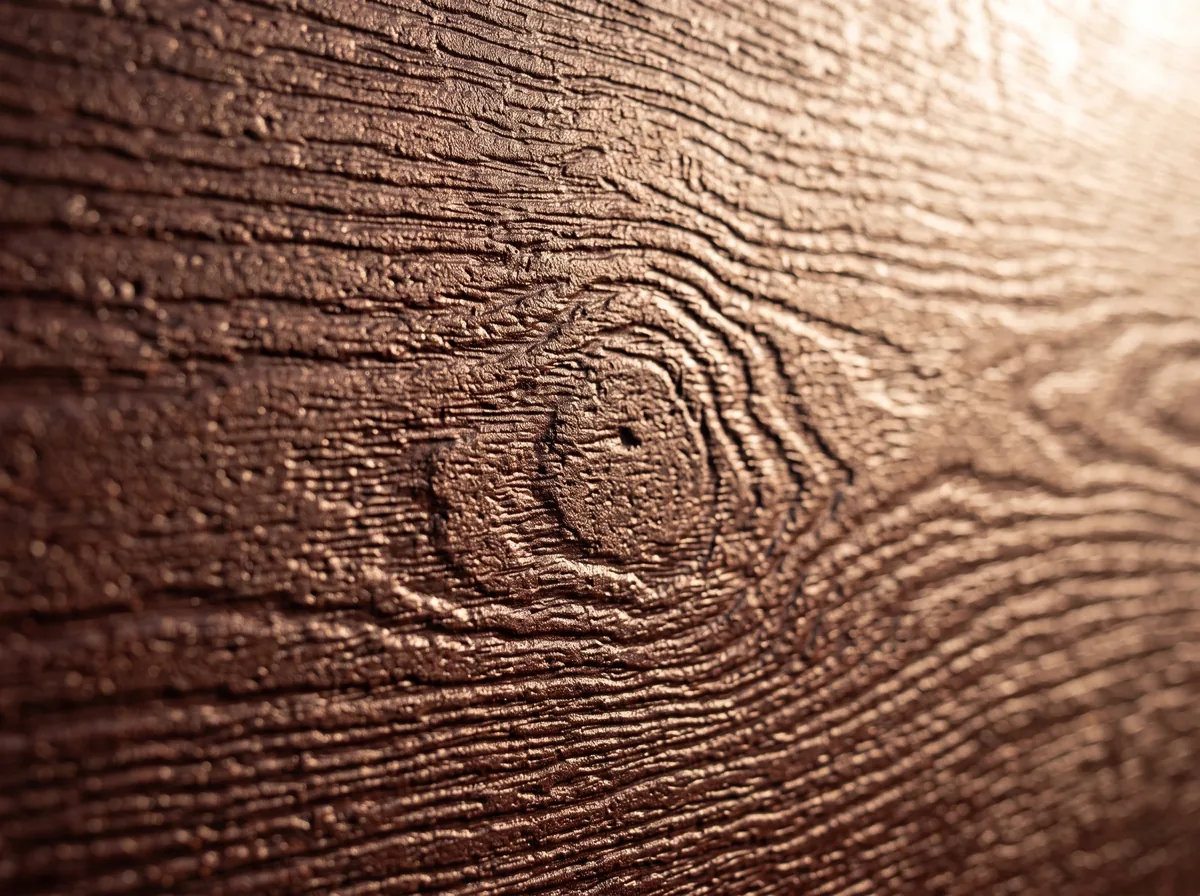
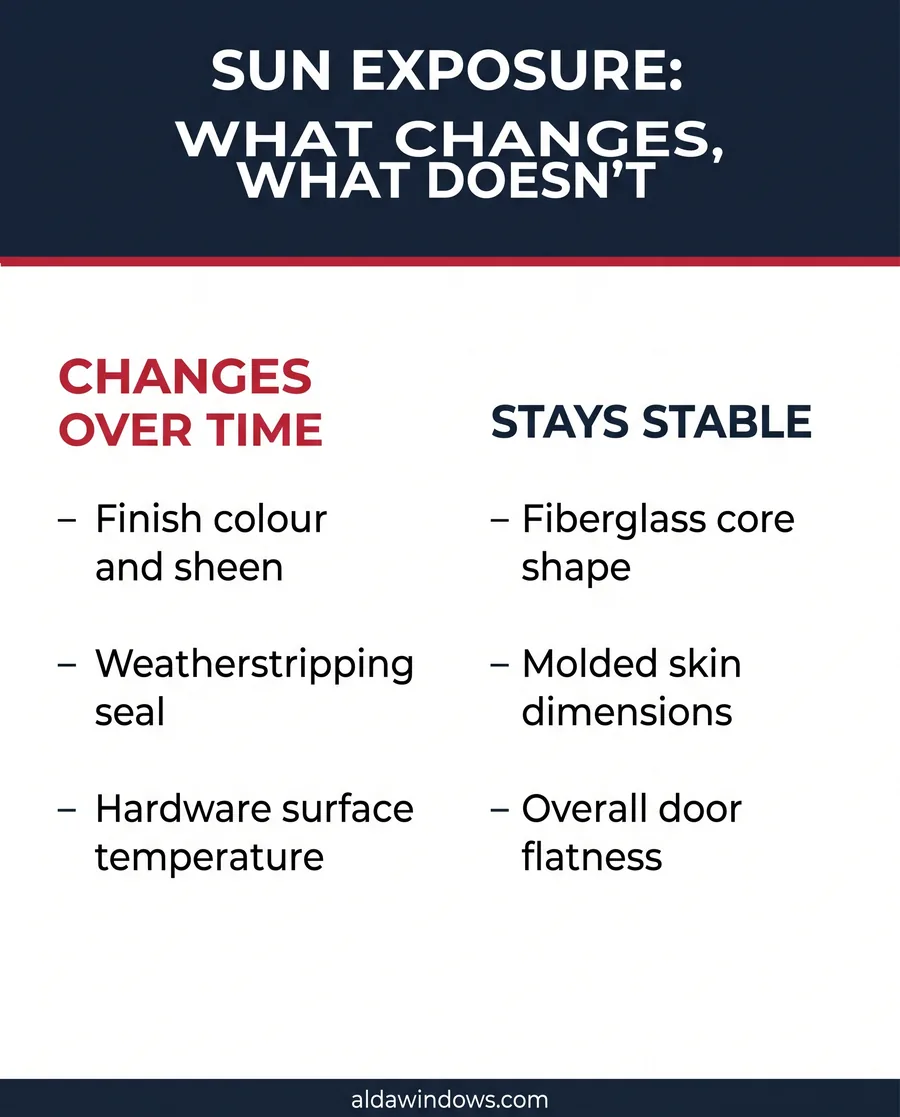
Toronto and the surrounding GTA get long, bright summer afternoons, and a west-facing entry can sit in direct sun for several hours on a July or August day. The slab itself does get warm to the touch. What changes over time on that kind of exposure is almost never the shape of the fiberglass. It is the finish.
- Colour fade. Darker paint and stain colours absorb more heat and tend to fade or chalk sooner than lighter colours on a fully sun-exposed door.
- Sheen loss. A high-gloss factory finish can dull unevenly on the sun-facing side before the shaded side shows any change at all.
- Hardware temperature. Dark metal handle sets and kick plates get genuinely hot on a west-facing door in August, which is a comfort issue more than a durability one.
- Weatherstripping wear. The compression seal around the slab is rubber or foam, and repeated heat cycling ages it faster than it ages a shaded door’s seal.
None of those are the fiberglass door warp scenario homeowners picture. They are maintenance items, and every one of them is manageable with a finish schedule and an annual hardware check. Understanding that distinction is most of what you need to stop worrying about fiberglass door warp on a sun-facing entry.
What is really going on when a door sticks
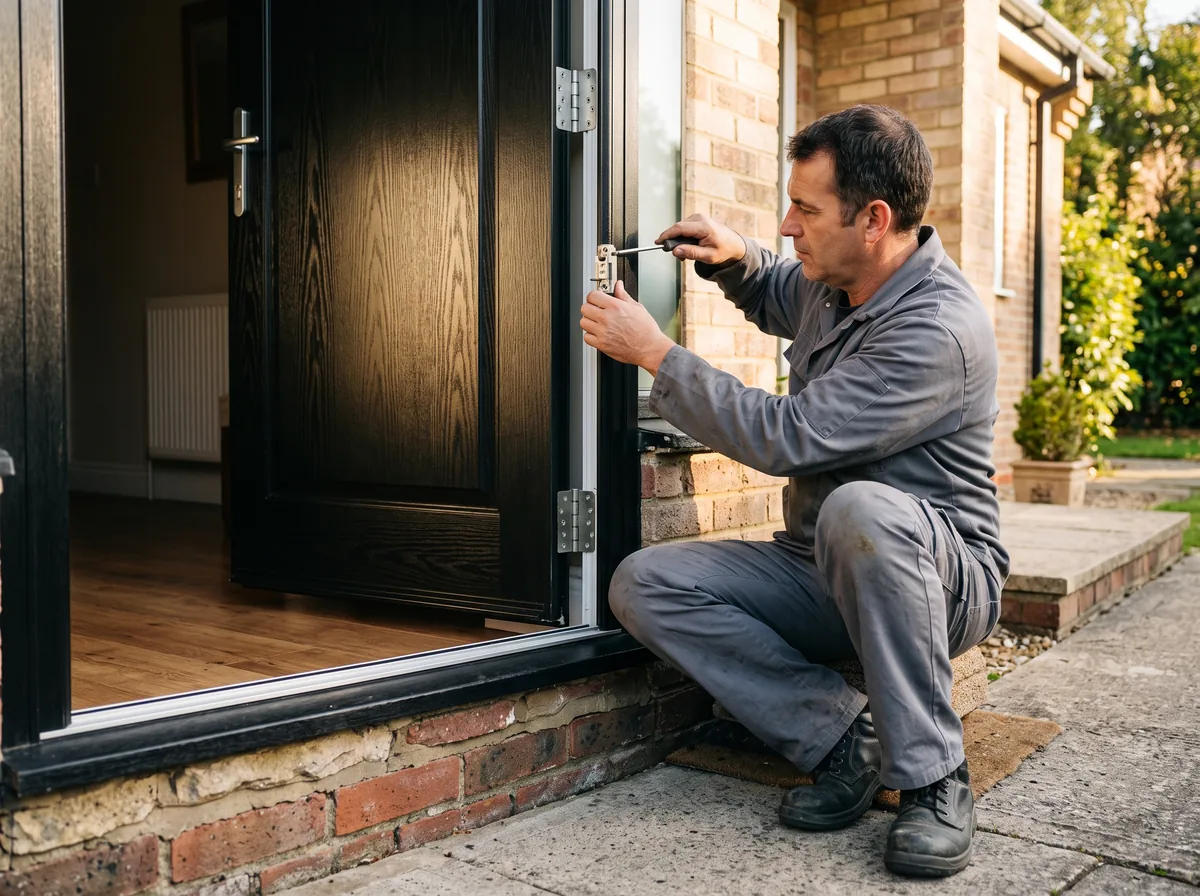
This is the part worth sitting with, because it explains almost every call ALDA gets about a door that “seems warped.” In the large majority of those visits, the fiberglass slab measures dead flat. The problem is somewhere else in the assembly.
The frame, not the slab
Many entry systems are built with a wood or composite jamb even when the slab itself is fiberglass. Wood jambs absorb humidity seasonally and can swell slightly, which changes how the door sits in the opening without the slab ever moving. That shows up exactly like a warp from the homeowner’s side of the door.
Hinges and screws
A heavy door on three hinges puts real, ongoing load on a handful of screws. Over a few years, especially with daily use, those screws can back out slightly or the top hinge can sag a fraction of a millimetre. The result is a door that catches on the strike plate or drags on the threshold, which reads as warping but is a five-minute hardware adjustment.
Weatherstripping and threshold settling
A compressed or torn weatherstrip changes how the door seats when it closes. A threshold that has settled slightly, common on a GTA home after a few freeze-thaw cycles, changes the gap at the bottom of the door. Both look like a warping slab from a few feet away.
Red flag
If a fiberglass door genuinely delaminates, meaning the skin visibly separates from the core or bubbles appear on the surface, that is a manufacturing or moisture-intrusion defect, not ordinary sun exposure, and it is usually covered under the door’s warranty. Photograph it and contact your installer or the manufacturer directly rather than waiting to see if it worsens.
Wood, steel, and fiberglass side by side
Seeing the three common entry door materials next to each other makes the fiberglass door warp question easier to place in context.
| Material | How it responds to sun and heat | What actually needs attention |
|---|---|---|
| Solid wood | Grain expands and contracts unevenly through the slab’s thickness | Refinishing on a fixed schedule; bowing and cupping over years of sun |
| Steel | Dimensionally very stable; the skin itself does not move | Dents from impact; rust if the finish is scratched through to bare metal |
| Fiberglass composite | Dimensionally stable core and molded skin resist movement | Finish fade and weatherstripping wear on the sun-facing side |
Fiberglass was developed in large part to solve the wood door’s sun problem while keeping a wood-look finish. That is the whole reason fiberglass entry doors dominate west-facing and south-facing installs across Toronto and Mississauga right now.
Good to know
This article is general information about how entry door materials typically behave, not a warranty statement for any specific product. Finish schedules, core construction, and warranty terms vary by manufacturer and by door line. Confirm the specifications and warranty coverage for your exact door with your installer or the manufacturer before making a decision. ALDA Windows and Doors is not responsible for decisions made solely on the basis of this article.
Keeping a sun-facing door looking and working right
None of this requires babying the door. It requires a short, repeatable routine, especially on a west-facing opening that catches the afternoon sun.
- Follow the manufacturer’s refinishing interval, not a guess. Paint and stain schedules exist because the finish, not the substrate, is what the sun actually degrades.
- Choose a lighter colour on the most exposed elevation if fade resistance matters more to you than a specific dark tone.
- Check the weatherstripping once a year, typically in spring, and replace it when it feels flattened or brittle.
- Have the hinges and strike plate adjusted if the door starts dragging or catching. This is routine maintenance, not a sign the door has failed.
- Ask your installer what core and finish system your specific door uses before you assume every fiberglass door behaves identically. Product lines differ.
A sun-facing entry door is not a maintenance-free purchase in any material. It is a maintenance-light one when the material is matched to the exposure, and that match is the actual decision worth spending time on.
Download the free quick guide
A one-page list of questions to ask your installer about core construction, finish warranty, and hardware for any door facing direct sun.
Frequently asked questions
Does a dark-coloured fiberglass door warp faster than a light one?
The colour itself does not change how the fiberglass core behaves, but a dark finish absorbs more heat than a light one, which typically shortens how long that finish looks fresh before it needs attention. If you are choosing a colour for a west-facing or south-facing opening in the GTA and fade resistance matters to you, a lighter shade generally holds its finish longer under the same sun exposure. This is a finish consideration, not a structural one, so it should not change your view on whether fiberglass itself is the right material for a sunny opening.
Does a south-facing or west-facing entry door need special care?
It benefits from a slightly tighter maintenance rhythm than a north-facing or shaded door, mainly around the finish and the weatherstripping. A quick look each spring, checking whether the paint or stain still looks even and whether the seal around the slab feels flattened or brittle, catches most of what heavy sun exposure actually does over time. Ask your installer what refinishing interval the manufacturer recommends for your specific product line, since this varies between door systems.
Can a fiberglass door be repainted or restained if the finish fades?
In most cases, yes. Fiberglass entry doors are typically designed to accept paint or stain the same way a wood door does, which is part of why the material became popular in the first place. The process and product recommendations differ by manufacturer, so confirm the correct primer and topcoat system with your installer or the door’s manufacturer before starting, rather than using a generic exterior paint that was not formulated for the composite surface.
How is a fiberglass door actually different from a wood door in the sun?
The core difference is what is inside. A solid wood door is one material with grain running through it, and that grain expands and contracts unevenly with heat and moisture, which is the mechanism behind warping. A fiberglass door has a molded composite skin over an engineered core, a construction method chosen specifically because it resists that kind of uneven movement. The sun still affects the fiberglass door’s finish over time, just not its shape in the way it affects solid wood.
If my door isn’t warped, why does it stick or drag in the summer?
The two most common causes are a frame or threshold that has shifted slightly with seasonal humidity, and hardware, meaning hinges, screws, or the strike plate, that has settled slightly out of alignment with regular use. Both are common, both are normal wear on any door regardless of material, and both are usually a short adjustment rather than a replacement. If the door was recently installed and already sticking, that is worth a callback to the installer to check the original alignment.
Bottom line
The fiberglass door warp fear does not hold up once you know what the door is made of. A correctly built fiberglass door does not warp the way a wood door does, because it is not built the way a wood door is. What a sun-facing GTA entry actually needs is a finish schedule and an annual hardware check, not a warranty claim.
If a door in your home is sticking, gapping, or dragging and you are not sure whether it is the slab, the frame, or the hardware, that is exactly the kind of visit ALDA does across Etobicoke, Vaughan, and Oakville. You can request a free estimate and have someone look at the actual door instead of guessing from a description.