
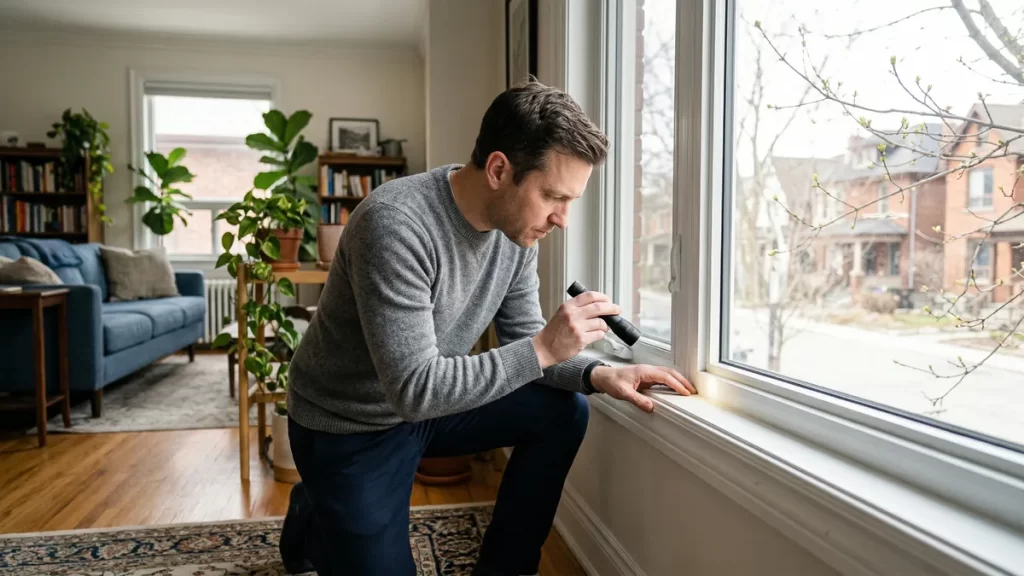
After five months of freeze-thaw, road salt drift, and ice dams, every window in a Toronto home has taken a small beating. Spring is the right time to walk the perimeter, find the damage early, and decide what gets a tube of caulking versus what gets a quote for replacement. If you are already weighing a full upgrade, our vinyl window replacement service can give you a free in-home assessment, but most spring problems start with a 20-minute inspection you can do yourself.
This checklist walks you through the 12 things to look for, in roughly the order a professional installer would check them. None of it requires tools more sophisticated than a flashlight, a credit card, and a sheet of paper. By the end you will know which windows are still healthy, which ones need a small repair, and which ones are quietly costing you money on every Enbridge bill.
Why spring is the right time to inspect
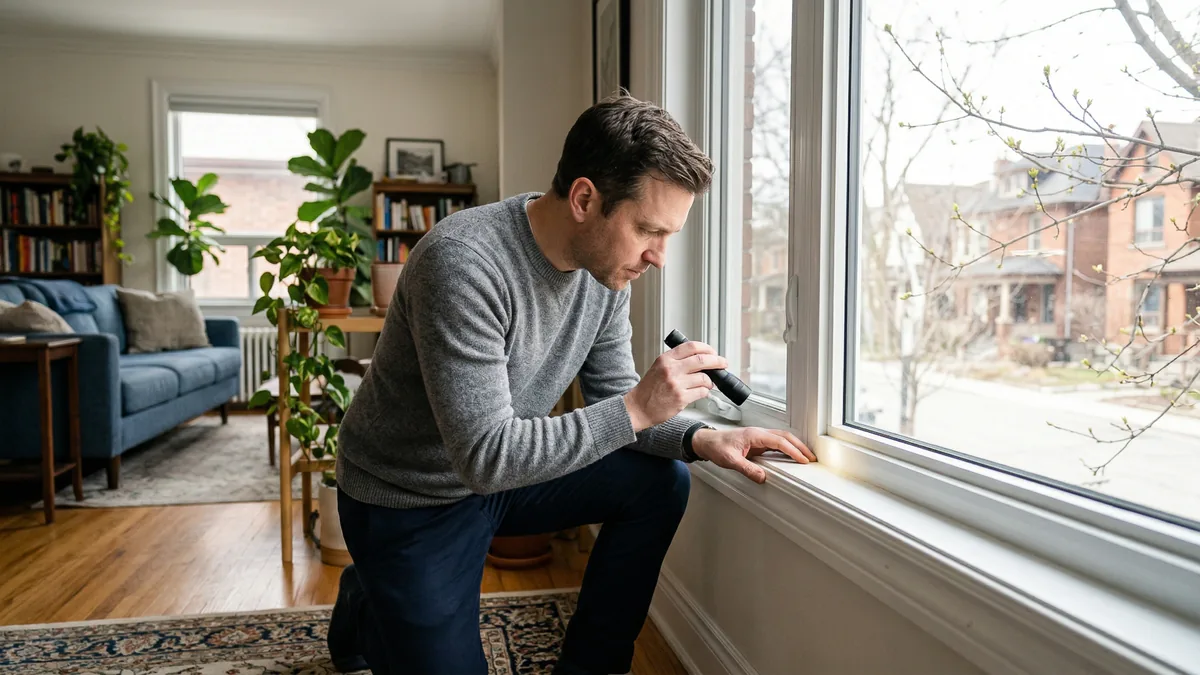
Seal failures and frame movement that happen during winter are easiest to detect when the temperature gap between inside and outside is still meaningful but the snow and ice are gone. By late April you can see the bottom of the sill, the brick mould, and the caulking joints clearly. Wait until July and the wood will have dried out, hairline cracks will close, and you will miss problems that come back next winter.
There is also a practical reason. Most reputable GTA window companies are booked four to eight weeks out by mid-summer. Catching a problem in April and getting on the schedule means installation in May or June, before the busy fall rush.
1 to 3: the visual sweep
Start outside on a dry day. Walk the full perimeter of the house and look at each window from about three metres back, then close up.
1. Check for fogging between the panes. A failed insulated glass unit (IGU) shows up as a permanent haze, water droplets, or a milky film between the two panes of glass. Wiping the window does nothing because the moisture is sealed inside. A failed IGU has lost its argon fill and its insulating value is roughly cut in half. The glass unit can usually be replaced without replacing the whole window if the frame is healthy.
2. Look at the exterior caulking joints. Pay attention to the joint between the brick mould and the brick or siding, and the joint between the brick mould and the window frame itself. Cracks wider than the edge of a credit card, missing chunks, or caulking that has pulled away from one side are all failures. This is the single most common GTA problem because winter movement and UV exposure both attack the joint.
3. Inspect the brick mould or wood casing. Soft spots, paint that flakes in sheets, or visible black staining usually mean rot. Push a screwdriver gently into the bottom corners of any wooden trim — the wood should resist firmly. Rot in the brick mould often hides bigger rot in the framing behind it.
4 to 6: the operating test
4. Open and close every operable window. Sliders that bind, casements that stick, and double-hungs that will not stay up are all signs that the frame has shifted or that hardware has failed. A casement crank that feels gritty or skips teeth is a $40 part you can swap, not a window replacement.
5. Test the lock. The lock is what pulls the sash tight against the weatherstripping. If it engages without resistance, the seal is loose. If you have to bang the sash to get the lock to seat, the frame is out of square. Both reduce thermal performance and security.
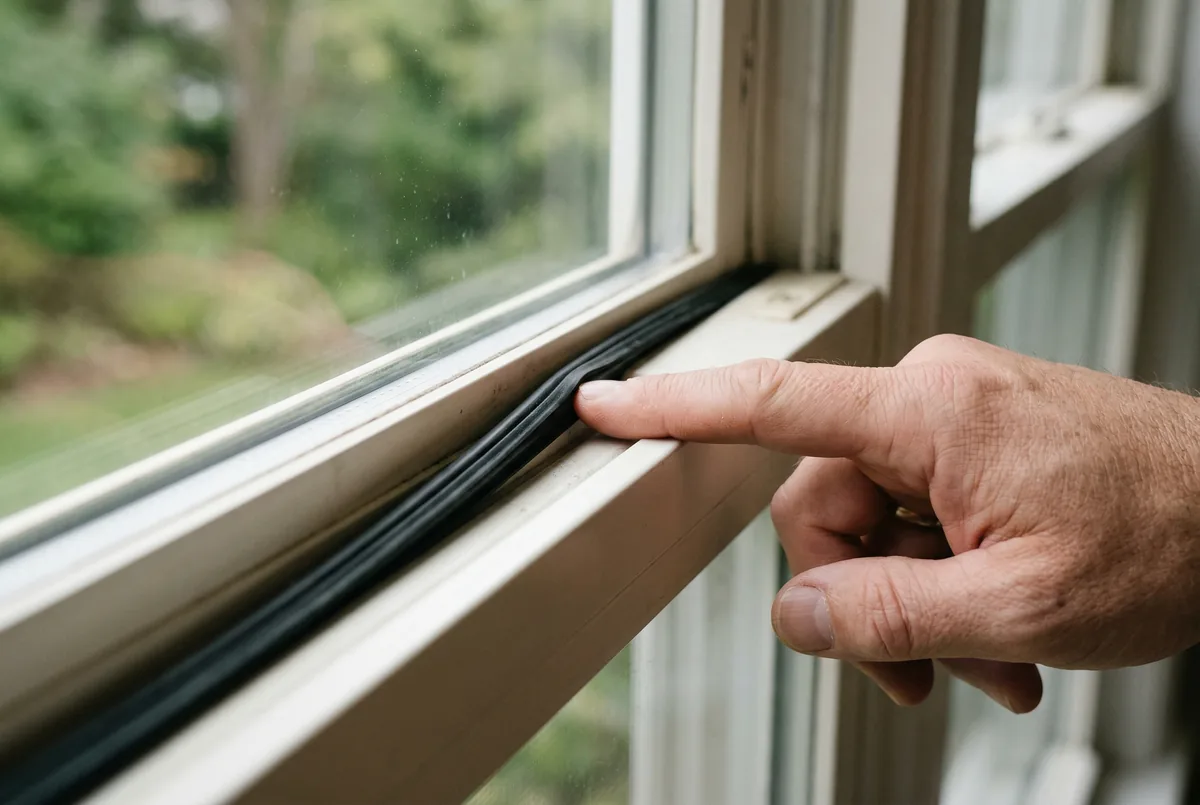
6. Check the weatherstripping. Open the sash and run a finger along the weatherstrip on all four sides. It should feel pliable and spring back when you press it. Hard, cracked, or compressed weatherstrip lets cold air leak past even when the lock is engaged. Replacement strip is sold by the foot at any home centre.
7 to 9: the leak test
7. The dollar-bill test. Close and lock the window with a sheet of paper or a dollar bill trapped between the sash and the frame. Tug the bill. If it slides out with no resistance, the weatherstripping is gone or the sash is not pulling tight. Repeat at the top, bottom, and both sides. A healthy window grips the bill firmly.
8. The candle test. On a still day, light a tea candle and slowly move it around the perimeter of each window from the inside. A flickering flame shows where air is moving. A flame that gets pulled hard in one direction is a major leak. Be careful with curtains.
9. Check the interior trim for staining. Brown or yellow staining on the interior wood or drywall under a window almost always means water has been getting in. The leak may be in the caulking, the head flashing, or the wall above the window. This is the most expensive class of problem and the one most likely to need professional attention.

10 to 12: the inside finish
10. Look for condensation patterns. Light fogging on the inside of the glass on a cold morning is normal humidity. Condensation that pools on the sill, runs down the frame, or creates ice along the bottom edge means the U-value is no longer adequate or the home is too humid for the glazing package installed.
11. Check the screen frames. Bent screen frames, torn mesh, or frames that no longer sit flush in the track are easy fixes — but a screen that has been missing for a season usually means the inside of the track is dirty or rusted. Clean it now or the slider will get worse.
12. Make a list and prioritise. Group findings into three buckets. Bucket A: cosmetic, do it yourself this weekend (caulking, weatherstripping, hardware swap). Bucket B: get a quote (one or two failed IGUs, a single rotten brick mould). Bucket C: replacement candidate (multiple failures on the same window, structural rot, frame out of square). Bucket C windows are usually the ones quietly burning the most energy.
When to repair versus replace
A general rule used by GTA installers: if more than three of the twelve checks fail on a single window, replacement is usually cheaper over a five-year horizon than chasing repairs. A single IGU swap on a healthy frame runs $250 to $450. A full vinyl window replacement runs $750 to $1,800 for a standard size including installation, brick mould, and disposal of the old unit.
The exception is heritage homes in places like Cabbagetown, the Annex, or older parts of Mississauga’s Port Credit, where original wood windows may have heritage value or be subject to district guidelines. In those cases, restoration of the existing sash with new weatherstripping and a storm window can outperform a vinyl retrofit and preserve resale value.
2026 rebate programs to know
Two programs apply to most GTA homeowners replacing windows in 2026. The Enbridge Home Efficiency Rebate Plus (HER+) offers up to $400 per window when paired with other envelope upgrades and a qualifying ENERGY STAR Most Efficient rating. The Greener Homes Loan from Natural Resources Canada is still open for interest-free financing of up to $40,000 for envelope work including window replacement.
Both programs require an EnerGuide pre and post evaluation by a registered energy advisor before work begins. If you think replacement is on the table, book the pre-evaluation in April or May so the rebate paperwork is in place before installation.
Ontario homeowners may also qualify for the Ontario Home Renovation Savings Program, which offers additional support for energy-efficient upgrades including window replacement. Check the provincial program page for current eligibility and amounts.
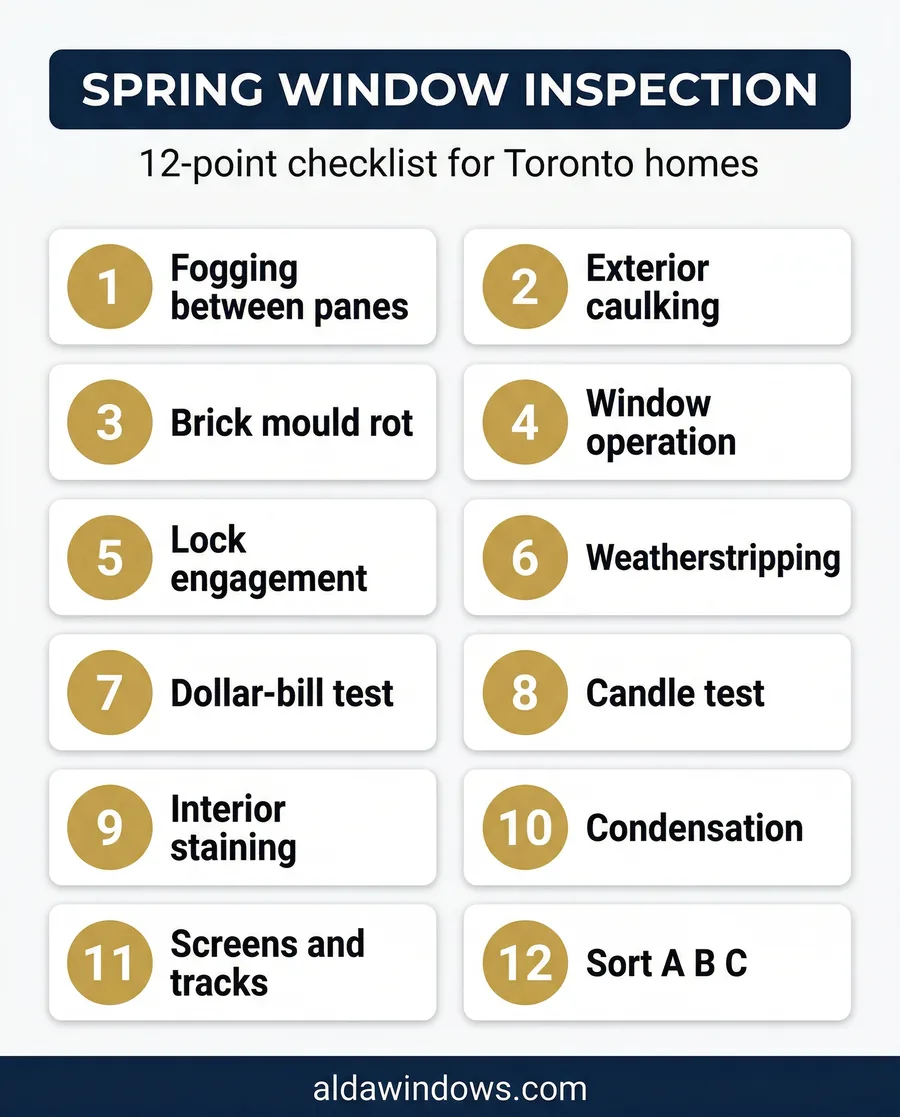
Save this as a PDF and keep it on hand for your project planning.
Download: Spring Window Inspection ChecklistFrequently asked questions
How long should an insulated glass unit last in Toronto?
A quality argon-filled IGU installed in a vinyl frame should hold its seal for 15 to 25 years. Cheaper units, south-facing windows that get heavy UV, and units installed under aluminum capping that traps heat tend to fail earlier — often around year 10 to 12.
Can I replace just the glass instead of the whole window?
Yes, in most cases. If the frame, hardware, and weatherstripping are still healthy and only the IGU has failed, a glass-only replacement is roughly one-third the cost of a full window replacement and can be done in a single visit by most installers.
Is condensation on the inside of my windows a problem?
Light condensation on cold mornings is normal. Heavy condensation that pools on the sill or freezes is a sign your home is too humid for the U-value of the glass, or the glass is no longer performing. Run a hygrometer for a week — interior humidity in winter should sit between 30 and 40 percent in Toronto.
How much does a full window inspection cost from a professional?
Most reputable GTA window companies, ALDA included, offer free in-home assessments for homeowners considering replacement. A pure inspection from a building inspector or energy advisor runs $200 to $500 depending on the number of windows and whether a blower-door test is included.
Should I caulk my windows every spring?
Not every spring, but every three to four years is reasonable for exterior caulking joints, more often if the joints face south or are exposed to driving rain. Use a high-quality polyurethane or silicone-blend sealant rated for exterior masonry, not painter’s caulk.
Talk to ALDA about your windows and doors
ALDA Windows and Doors has been replacing windows and doors across Toronto and the Greater Toronto Area since the early 2000s. Free in-home assessments, transparent quotes, and a permanent crew that does the installs themselves rather than subcontracting.
Request a free estimate or call us to book a no-pressure consultation.

Written by
Liam O.
Service writer | Window & Door Repairs
Liam handles ALDA service calls — failed seals, fogged glass units, broken hardware, sticking sliders, screen replacements, and weatherstripping repairs. He has logged over 4,000 service visits across the GTA and knows the failure modes of every window brand sold in the region over the last twenty years.