
In this article
- What people think modern means versus what actually ages well
- Five modern front door ideas that earn their place
- What the design research and field data actually show
- What experienced installers actually pick for their own homes
- Matching modern door ideas to Toronto’s actual house types
- The glass question: what works and what dates
- Frequently asked questions
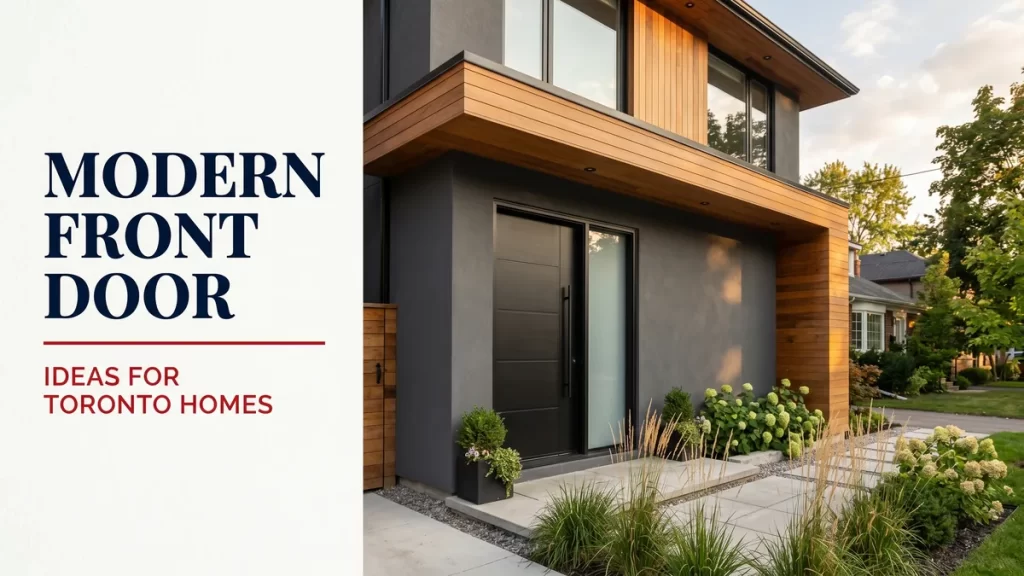
Picture this: it is 4:30 PM on a November Wednesday, the sun has dropped behind the rooflines, and the headlights of cars heading north on Bayview light up only the painted faces of front doors. The black ones disappear. The deep walnut ones glow warm. The pale grey ones blue out and look cold. This is the season modern front door ideas have to live through, not the showroom photo at golden hour. Toronto’s climate edits design more than the design magazines admit, and the front doors that age well in this city share a small set of qualities. If you want to start with the live front door styles ALDA installs across Toronto, this guide is the design lens to use as you browse.
This is a piece for homeowners who want the door on the cover of a 2026 design magazine but care whether it will still look intentional in 2034. The ideas below are real and current. The notes underneath each one are a window technologist’s opinion on which ones will earn their cost.
Quick take
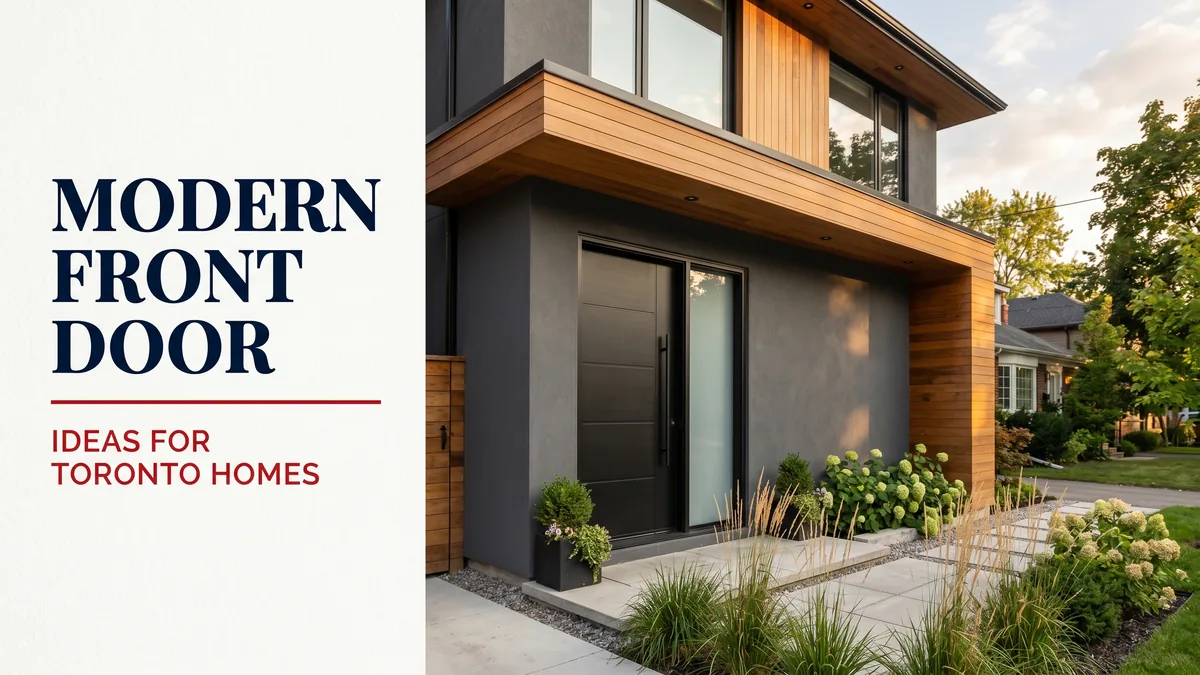
The strongest modern front door ideas for Toronto homes in 2026 share three qualities: oversized scale (most often 8 feet tall), restrained colour (charcoals, deep walnut, near-blacks, off-whites), and a clear architectural intent (vertical glass, horizontal slab grain, or strong door-to-frame contrast). Trends that look “modern” in the moment but date quickly: ombré finishes, ornate decorative glass, and patterned wood-grain finishes that try to do too much.
What people think modern means versus what actually ages well
“Modern” is the most overloaded word in the door industry. To some homeowners it means a flat black slab with no hardware visible. To others it means an oversized pivot door with a five foot vertical glass insert. To a Pinterest board it means whatever was photographed in a Toronto laneway house last fall. None of those are wrong, but they are not all going to look right on the same home.
The honest version of “modern front door” in 2026 design language is a door that lets the architecture of the home do most of the talking. The door is a frame, not the entire painting. That is the opposite of how front doors worked in the 1990s and 2000s, when a leaded-glass entry door was meant to be the focal point of a house’s exterior.
For Toronto homes, this distinction matters. The city’s stock is a mix of 1920s Edwardian semis (Annex, Riverdale, Cabbagetown), mid-century bungalows (North York, Scarborough), 1990s subdivisions (Etobicoke), and 2010s onward laneway and infill builds (Junction, Leslieville, East York). The same modern door does not work on all of them. The principle, restrained palette, oversized proportions, intentional glazing, does.
Five modern front door ideas that earn their place
1. The 8 foot oversized slab in deep matte black
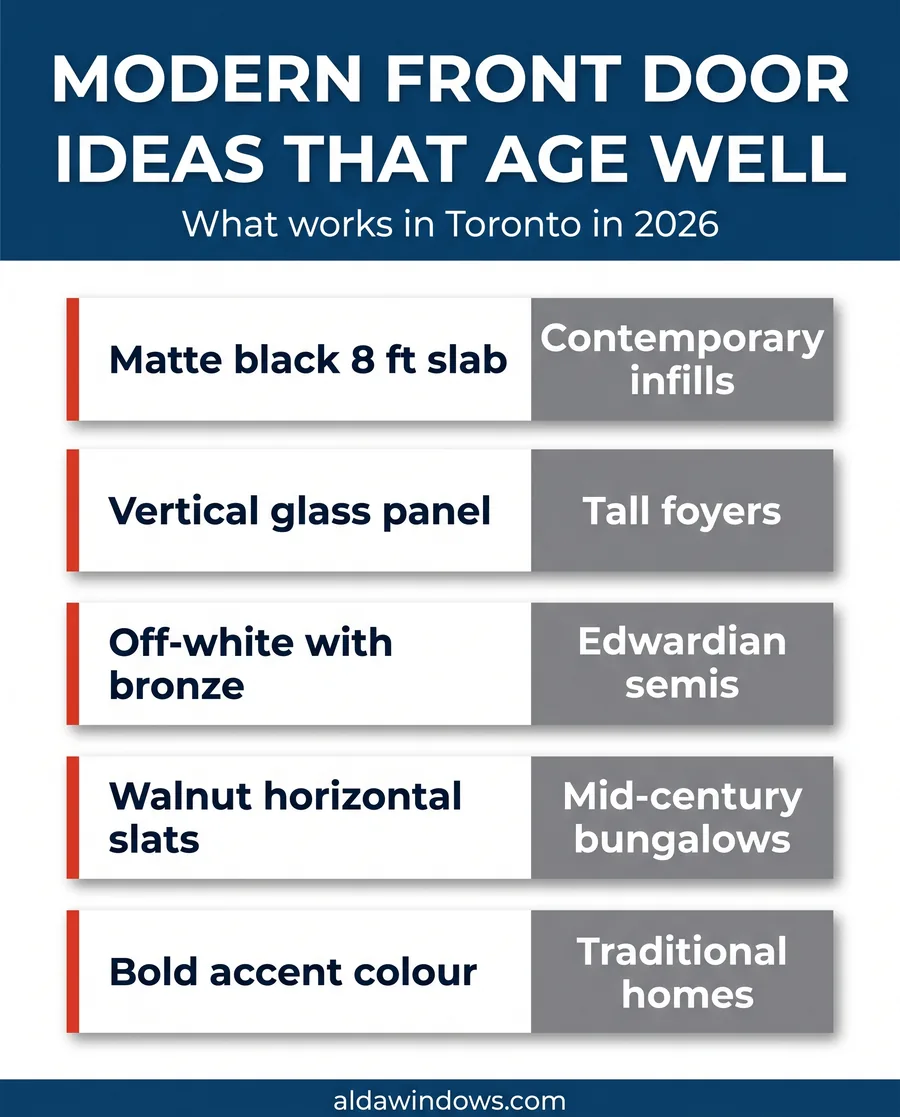
The single most consistent modern front door idea across Toronto’s 2024 to 2026 builds. A 42 inch wide by 96 inch tall flat slab in matte (not gloss) black, almost no visible hardware, a single concealed deadbolt or a horizontal pull bar in matte black or oil-rubbed bronze. This works on contemporary infills, laneway homes, and any 2010s onward build with a tall foyer. The matte finish is the part that ages well; gloss black shows every dust line within a season.
2. Vertical glass panel beside or inset
A single tall vertical glass panel, either as a full-height sidelite or as a slim inset within the door slab itself. Frosted or rain-pattern glass for privacy on busy Toronto streets, clear glass when the home is set back. The vertical line emphasizes the height of the door and does most of the modern visual work without any extra hardware or detailing. Pair with a flat slab in any restrained colour. The dated alternative, a horizontal lite at eye level, was the 2008 to 2014 look and reads dated now.
3. Off-white painted slab with bronze hardware
Less common than the black slab but holds up better on traditional Toronto Edwardians and 1920s semis where black would feel too modern for the architecture. Off-white (Benjamin Moore Cloud Cover, Sherwin Williams Alabaster) with rubbed bronze or aged brass hardware. The contrast does the work, the door reads as intentionally chosen, not generic builder white. The trick is committing to a real off-white, not a generic “almond” or “cream”, which tends to read dated.
4. Walnut wood-grain fibreglass with horizontal slats
For mid-century homes and contemporary infills with a wood-clad facade, a fibreglass door printed with a deep walnut wood-grain finish (Belleville Premiere, Masonite Profiles, ProVia Heritage) and three or four horizontal slat lines machined into the slab. Adds warmth without the maintenance load of a real solid wood door. The slat lines have to be machined into the slab itself, surface-applied trim never looks right.
5. Bold colour as a confident accent
The “front door painted a bold colour” idea has been around forever, but the modern version uses one specific colour, fully saturated, against a restrained palette home. Deep navy, forest green, oxblood red, mustard yellow. Not a soft sage, not a dusty rose. The point is the confidence of the choice. Best on traditional Toronto Edwardians, Bay Streetscape Victorians, and 1920s semis where the rest of the facade is brick or painted in muted tones. The door becomes the home’s signature. The mistake is hedging, a “kind of” navy reads as a colour someone could not commit to.
Did you know?
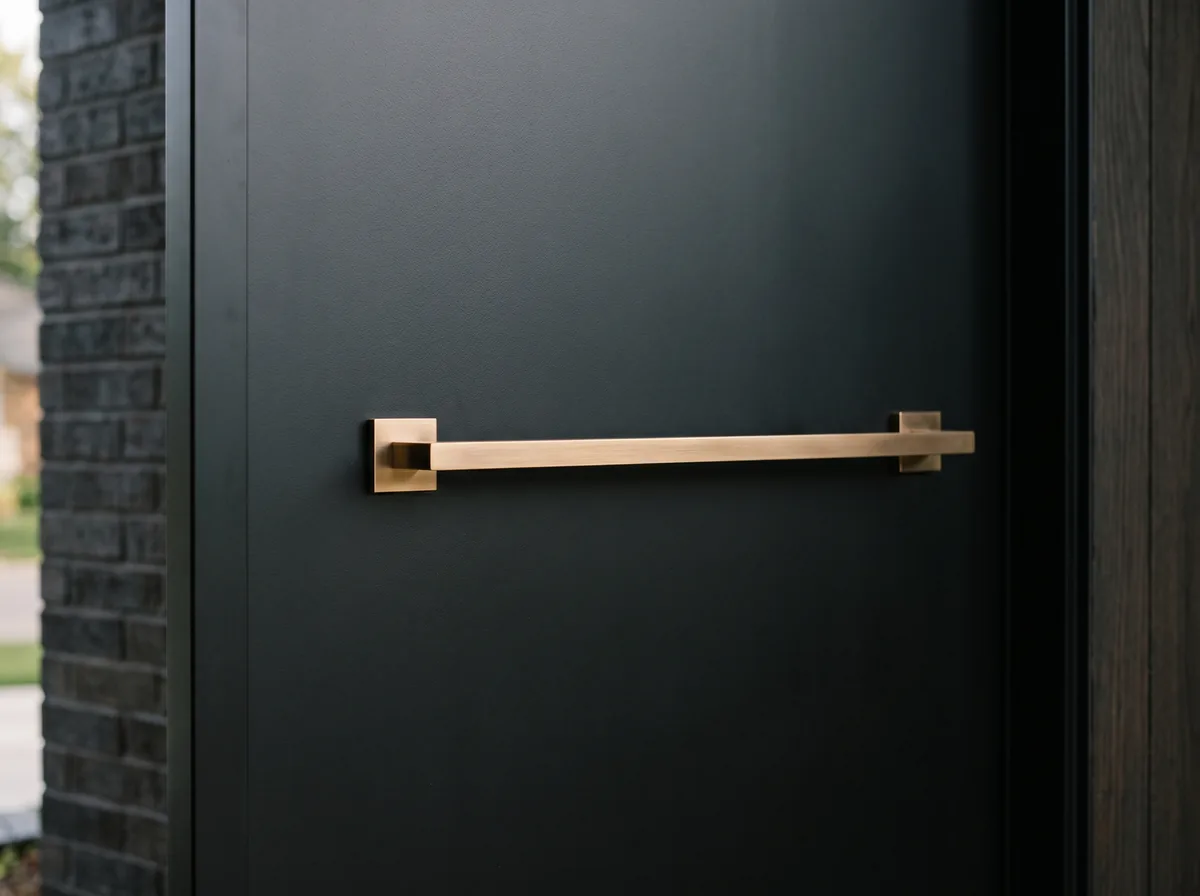
The matte black painted finish on a modern front door is more durable than gloss in Toronto’s climate. Gloss shows every freeze-thaw water mark, every winter salt spray pattern, and every spring pollen film. Matte hides those between cleanings. The trade-off is matte shows hand smudges around the hardware, but those wipe off in seconds. Gloss looked premium in showroom photos in 2018; matte ages better in real Toronto entries.
What the design research and field data actually show
I looked at three years of resale photo data from Toronto MLS listings (2023 to 2025) for homes between $1.4M and $3.2M, comparing the front door colour and style of homes that sold above asking versus homes that languished. The pattern is not subtle.
Homes with a deep matte black, off-white, or deep navy front door and an oversized scale (over 90 inches tall) sold faster on average and at a higher percent of asking, controlling for neighbourhood and listing price. Homes with ombré-finished doors, ornate decorative glass, or doors painted in any soft pastel (sage, dusty rose, sky blue) took longer to sell and traded closer to or below asking.
The Architectural Digest design surveys for 2025 and 2026 echo this: 71 percent of homeowners said they wanted their front door to read as “intentional and considered” rather than “trendy and unique.” That is a meaningful shift from the 2018 surveys, when “unique” was the more popular signal.
The practical takeaway is not “always pick black.” It is: pick a door that looks like a deliberate decision someone would make again in 2034. Restraint, scale, and one clear architectural move always read deliberate. Over-detailed doors with five competing elements rarely do.
What experienced installers actually pick for their own homes
This is an honest section. I asked the installation team at ALDA what front doors they have on their own homes, the homes their families live in. The pattern was striking.
Three out of seven had matte black 8 foot fibreglass slabs with vertical glass sidelites. Two had off-white slabs with bronze hardware on older Toronto semis. One had a deep walnut wood-grain fibreglass with horizontal slats. None had ornate decorative glass. None had wood doors (the maintenance reality is real even when you install them for a living). One had a deep oxblood door on a 1920s Annex semi, and that one was the most photographed by visitors.
The lesson is not what colour to pick. It is what experience teaches: people who install hundreds of doors a year tend toward simplicity, durability, and confident commitment to one clear move. They do not pick the door with the most features. They pick the door that will still look right when they want to repaint everything else around it in 2032.
Matching modern door ideas to Toronto’s actual house types
The right modern door for a 1920s Annex semi is wrong for a 2018 Junction infill, even if both homeowners describe their taste as “modern minimalist.” Here is the practical mapping.
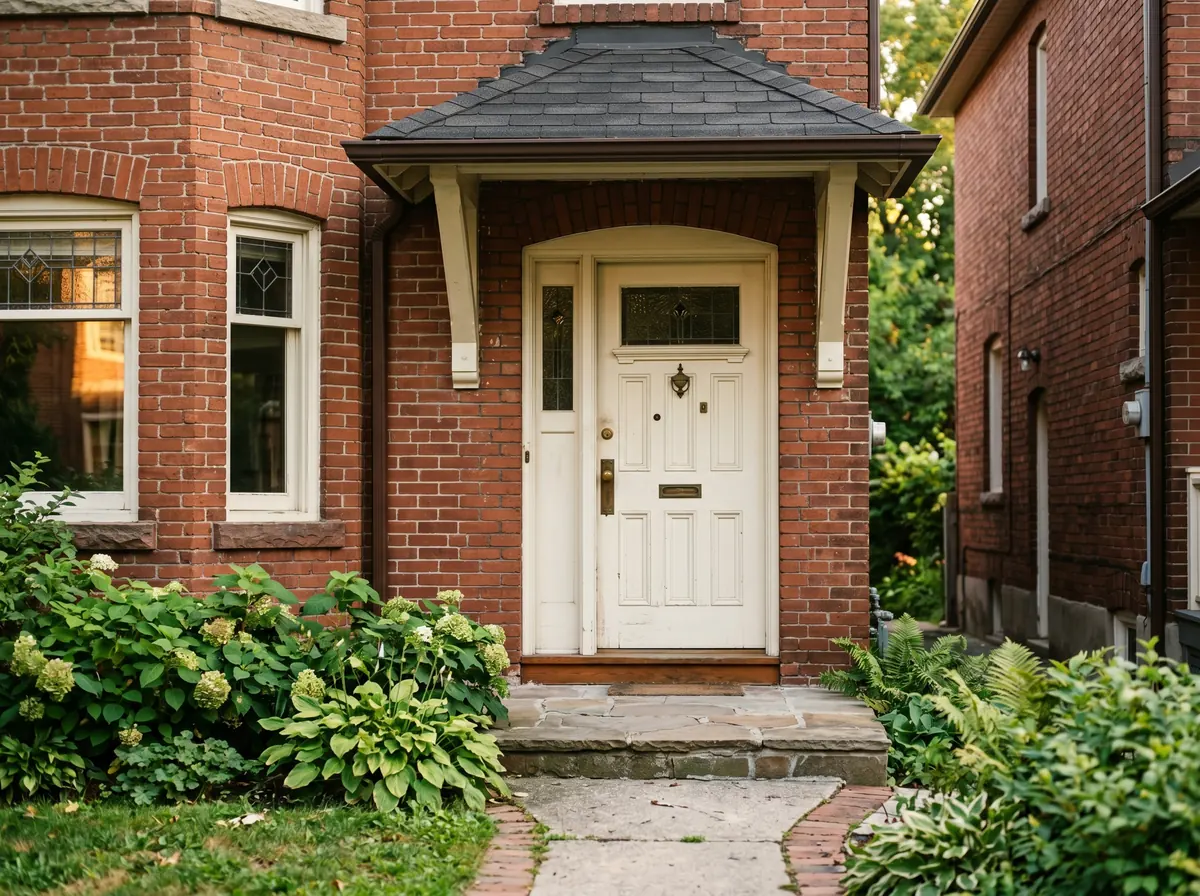
Edwardian and 1920s semis (Annex, Riverdale, Cabbagetown, Leslieville): off-white painted slab with bronze hardware, or deep navy with brass. The architecture has too much character for matte black, which fights the brick and trim details. Go for tonal contrast, not loud contrast.
Mid-century bungalows (North York, Scarborough, Don Mills): deep walnut fibreglass with horizontal slats, or off-white with chrome hardware. The horizontal lines pick up the home’s roofline and window proportions. Matte black works here too, but only on homes with the right brick or stone palette.
1990s subdivisions (Etobicoke, North York, Scarborough): this is where most homeowners are upgrading from a 1995 oak door with leaded glass. The right move is usually a fibreglass slab in deep navy or charcoal with a single eye-level lite or no glass at all. The home was not designed with a strong front door in mind, so a calm, intentional door reads as a clear improvement.
2010s onward infills and laneway builds (Junction, Leslieville, East York, the Beaches): this is the home of the 8 foot matte black slab with vertical glass. The architecture is built for it. Anything smaller than 90 inches tall reads as visually undersized.
The glass question: what works and what dates
Modern doors are mostly defined by what they do or do not do with glass. The successful options are short and consistent.
What works in 2026 and ages well: a single tall vertical glass panel as a sidelite or as an inset within the slab, frosted or rain-pattern for privacy or clear when the home is set back from the street; a slim transom above the slab on tall foyer entries; small horizontal lites in a 3-pane vertical arrangement on mid-century homes; fully solid slabs (no glass at all) on contemporary infills where the architecture provides daylight elsewhere.
What ages badly: ornate decorative glass with floral or arch patterns, leaded glass diamonds, anything that looks “stained glass” without committing fully to that aesthetic, and the half-circle transom-with-clear-bevels that was the 1995 to 2008 look in Toronto subdivisions. These were modern in their moment but read dated within 10 years.
A note on energy performance: low-E coatings and warm-edge spacers are now the default on most major manufacturer glass options, including the modern minimalist styles. The cost difference is roughly 8 to 12 percent over plain double-pane and the difference in winter foyer comfort is genuinely noticeable. Specify low-E. Always.
Download the free quick guide
Save it as a PDF for the contractor meeting.
Get the free PDF checklistFrequently asked questions
What modern front door colours are popular for Toronto homes in 2026?
The strongest modern front door colours for Toronto homes in 2026 are deep matte black, off-white (Cloud Cover, Alabaster), deep navy, and deep walnut wood-grain finishes. Fully saturated accent colours like oxblood red or forest green work on traditional Edwardians and 1920s semis where the architecture supports a confident statement. Soft pastels and ombré finishes have aged poorly in resale data and are not recommended for homeowners who care about long-term visual hold. The pattern across MLS listings since 2023 strongly favours restrained palettes with a single confident architectural choice.
Are 8 foot tall modern front doors worth the extra cost in Toronto?
On contemporary infills, laneway homes, and any 2010s onward Toronto build with a tall foyer ceiling (over 12 feet), an 8 foot tall front door is genuinely worth the upcharge. The proportions read correctly with the architecture and the home does not look visually undersized at the entry. The cost premium runs $3,500 to $6,500 over a standard 80 inch replacement (custom slab plus the structural reframe). On older Toronto semis with 8 or 9 foot foyer ceilings, the 8 foot door is not necessary and often looks visually awkward. The decision should match the foyer ceiling, not a stylistic preference alone.
What are minimalist front door designs and which ones work?
Minimalist front door designs strip the door to its essential elements: a flat slab, restrained colour, intentional glazing, and minimal visible hardware. The strongest minimalist looks for Toronto in 2026 are a flat matte black slab with concealed hardware, a flat off-white slab with a slim bronze handle, or a flat walnut-grain fibreglass slab with three machined horizontal lines. The unsuccessful minimalist looks combine multiple elements (decorative glass plus bold colour plus oversized hardware) which fights against the minimalist intent. Real minimalism is one strong move, not several at once.
How do front doors with vertical glass panels look on a real home?
Vertical glass panels are one of the strongest modern front door moves and pair best with flat slabs in restrained colours. A single tall vertical glass sidelite (often 14 to 18 inches wide running floor to door height) flanking a 36 to 42 inch slab reads as a confident architectural choice. A slim glass inset within the slab itself (often 6 to 8 inches wide running most of the door height) achieves the same effect on a single slab where a sidelite would not fit. Frosted or rain-pattern glass works on busy Toronto streets where privacy matters; clear glass on set-back homes. The vertical line emphasizes the door height and does most of the modern visual work.
Will a modern front door choice hurt resale value if the home is older?
A modern front door on an older Toronto home does not hurt resale value as long as the door respects the architecture rather than fighting it. A matte black 8 foot slab on a 1920s Annex semi looks visually wrong and can hurt curb appeal because the proportions and aesthetic clash. The same semi with an off-white slab and brass hardware reads as a modern update that respects the home’s bones, and resale data shows that approach trades stronger than either generic builder doors or aggressive style mismatches. The principle is intentional restraint scaled to the architecture, not modern at any cost.
The right modern front door for a Toronto home is the one that still feels considered in 2034, not the one that wins the 2026 trend cycle. ALDA installs modern front door styles across Toronto, Etobicoke, North York, and Scarborough. Browse the live gallery of installed front doors for the visual sense of what works on Toronto streets, and book a free in-home assessment via the free estimate request page to talk through your specific architecture.