
In this article
- How sliding patio doors fail
- Upgrade 1: Add an auxiliary foot lock
- Upgrade 2: Install an anti-lift block
- Upgrade 3: Drop a Charley bar
- Upgrade 4: Replace the standard latch with a multi-point lock
- Upgrade 5: Reinforce the strike side of french doors
- Upgrade 6: Install hinge bolts on french doors
- Upgrade 7: Upgrade the glass to laminated security glass
- Upgrade 8: Add a smart sensor and exterior lighting
- Frequently asked questions
- Talk to ALDA
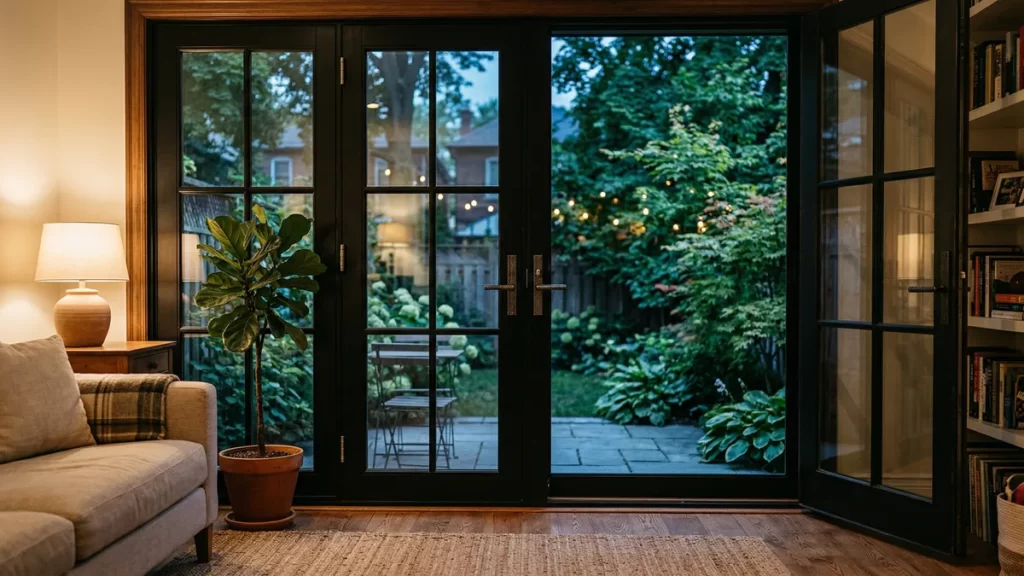
Toronto Police Service data on residential break-ins shows the same pattern year after year: the rear sliding patio door is the single most common point of entry, ahead of front doors and ground-floor windows. The reason is simple – sliders are often hidden from the street, the standard latch on most patio doors is a single hook that can be defeated in under a minute, and many GTA homeowners assume the privacy of a backyard is itself a form of security. It is not. If your home is more than a decade old and you have not upgraded the patio door hardware, this is one of the highest-leverage things you can do this spring. Our window and door specialists serving Toronto and the GTA see the failure modes constantly, and most of the fixes are inexpensive.
Below are eight upgrades, ordered roughly from cheapest to most involved. The first three you can do yourself in an afternoon. The last three are usually professional installs. Together they take a standard sliding patio door from a soft target to something that is no longer the path of least resistance.
How sliding patio doors fail
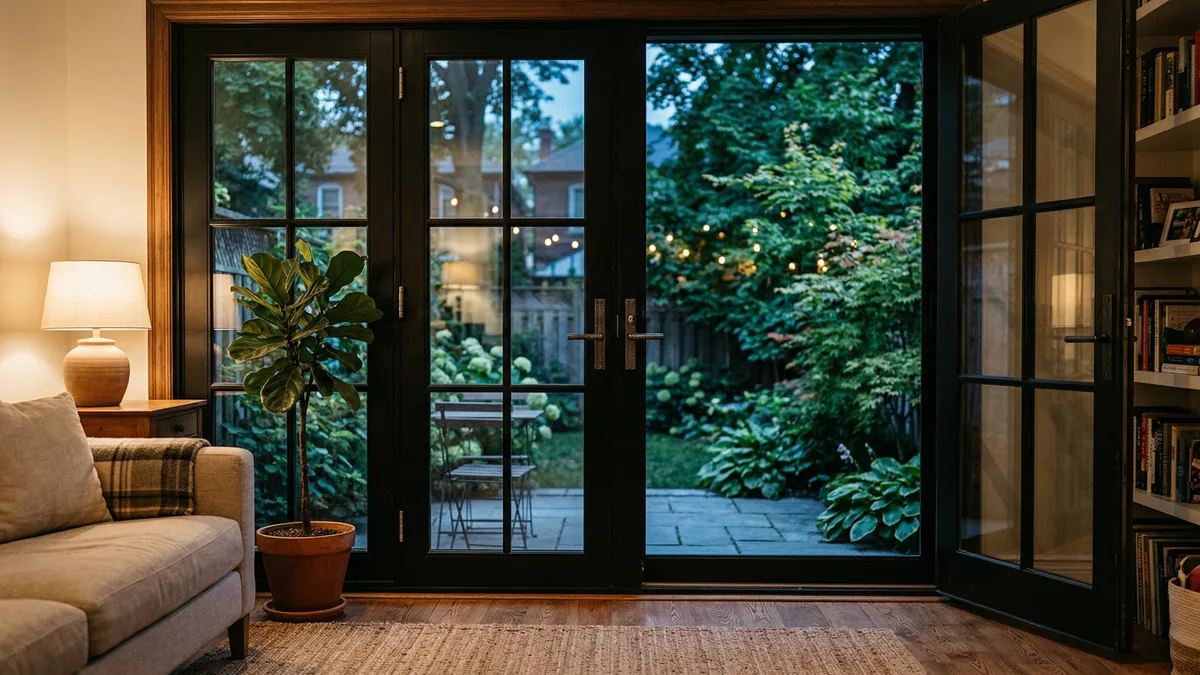
Three weaknesses come up over and over in GTA break-in reports. First, the latch on a stock slider is a small hook of stamped steel that hooks into the strike plate on the fixed panel. A flat tool slipped between the door and the frame can lift the hook in seconds. Second, the slider can be lifted vertically out of the track, especially on older units where the rollers have settled and the gap at the top has grown. Third, the glass itself is usually a single piece of tempered glass – strong against impact but not against a sustained pry attack on the frame.
Newer hinged french-style patio doors have different failure modes. The mortise lock is much stronger, but the hinge side is often weak: short screws into a thin frame will fail under a kick. We see french doors split open at the hinges almost as often as we see sliders defeated at the latch.
Upgrade 1: Add an auxiliary foot lock
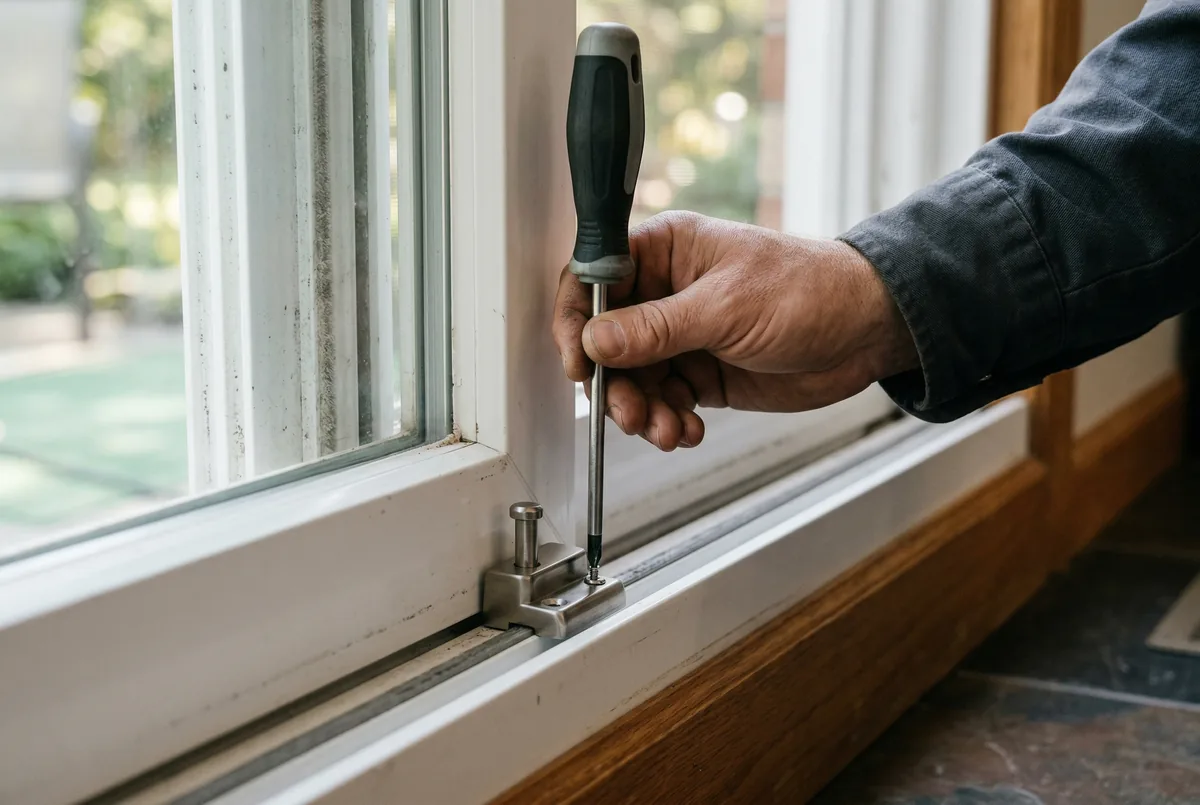
A foot-operated auxiliary lock screws into the bottom rail of the sliding panel and pins the panel to the track. Cost: $15 to $30 from any hardware store. Installation: ten minutes with a screwdriver. The pin is solid steel and cannot be defeated from outside without destroying the door frame. This is the single best dollar-for-dollar upgrade for any sliding patio door.
Upgrade 2: Install an anti-lift block
Block the vertical lift attack by installing a small bracket or a length of dense rubber along the upper track of the slider. The goal is to leave only a few millimetres of vertical play enough for the door to roll but not enough to lift the panel out. Many vinyl patio doors made before 2015 have no anti-lift feature at all. Cost: $20 for a kit, or free if you cut a length of dense weatherstrip.
Upgrade 3: Drop a Charley bar
The classic security bar sometimes called a Charley bar or a slide-stop is a hinged metal arm that drops down across the inside of the slider, blocking the panel from opening even if the latch is defeated. Cost: $25 to $60. Installation: a few screws. The visible deterrent value is real: a Charley bar in plain sight tells someone looking through the glass that this door is not the easy option.
Upgrade 4: Replace the standard latch with a multi-point lock
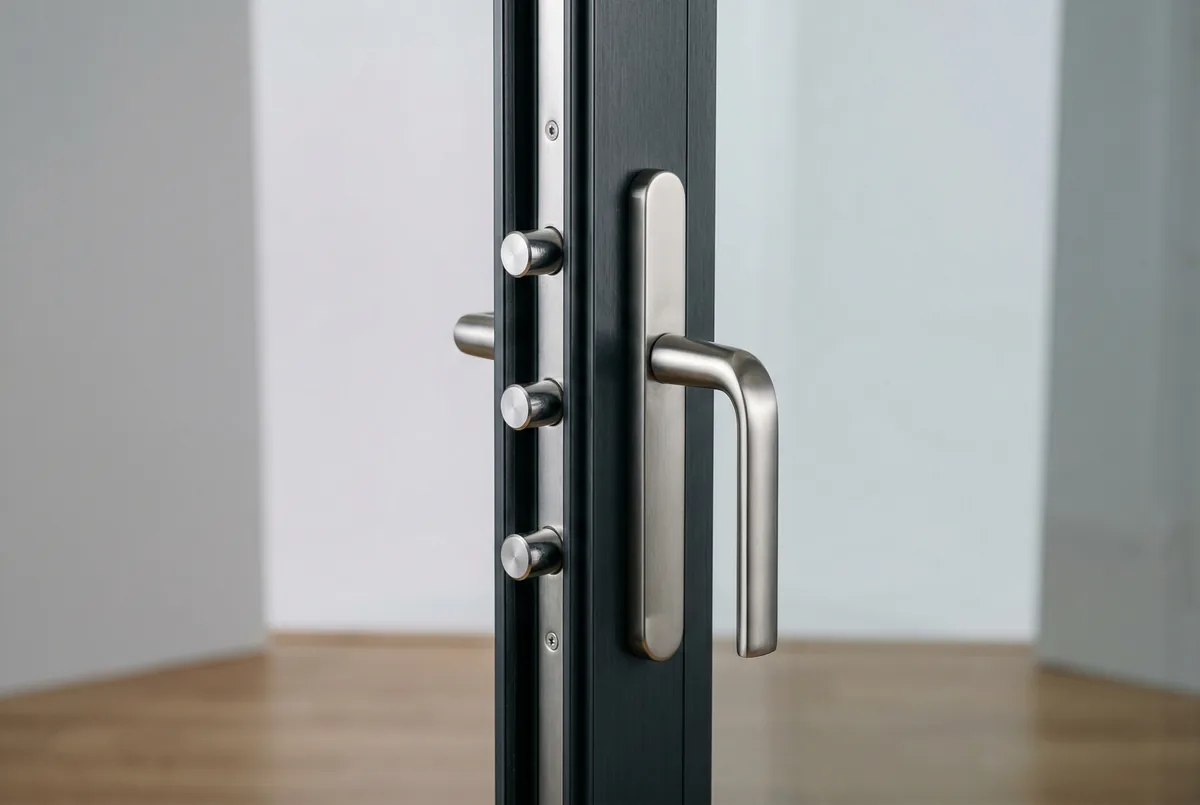
Most stock sliding doors have a single-point latch. A multi-point conversion kit replaces the latch with a system that engages two or three points up and down the leading edge of the panel – top, middle, and bottom when you turn the handle. This converts the slider from a hook-defeat target into something closer to a vault door. Cost installed: $250 to $450. This is the upgrade we recommend most often when a homeowner asks where to spend money first.
Upgrade 5: Reinforce the strike side of french doors
On french-style patio doors, the most common attack is a kick on the active panel that splits the strike-side jamb. Replace the short factory screws in the strike plate with 75 mm (3 inch) screws that bite into the framing studs behind the jamb, not just the trim. While you are there, install a longer reinforcement plate that wraps around the strike location. Cost: under $40 in parts. This single change increases kick resistance by a factor of three to five, which is enough to discourage most opportunistic attempts.
Upgrade 6: Install hinge bolts on french doors
The hinge side of a french door fails as often as the strike side. Hinge bolts are short steel pins that pin the door to the frame on the hinge side, so the door cannot be removed even if the hinges are defeated or the screws are pulled. Two bolts per door, $20 in parts, fifteen minutes per side with a drill. Combined with the long strike-side screws, this closes both ends of the door.
Upgrade 7: Upgrade the glass to laminated security glass
If you are planning a patio door replacement anyway, specifying laminated security glass for the leading panel is the most effective single upgrade you can make. Laminated glass holds together when broken like a car windshield so even after a sustained attack the opening is still blocked. The premium is about $200 to $400 per panel over standard tempered glass. We recommend it for any patio door that is not visible from the street.
Upgrade 8: Add a smart sensor and exterior lighting
Hardware upgrades are most effective when paired with detection. A simple magnetic contact sensor wired to a smart hub or alarm panel costs under $40 and tells you the moment the door is opened. Pair it with a motion-activated light over the patio most break-ins on rear sliders happen at night and any visible light cuts the attempt rate sharply. Neither upgrade is technically about the door itself, but together they multiply the value of every other change on this list.
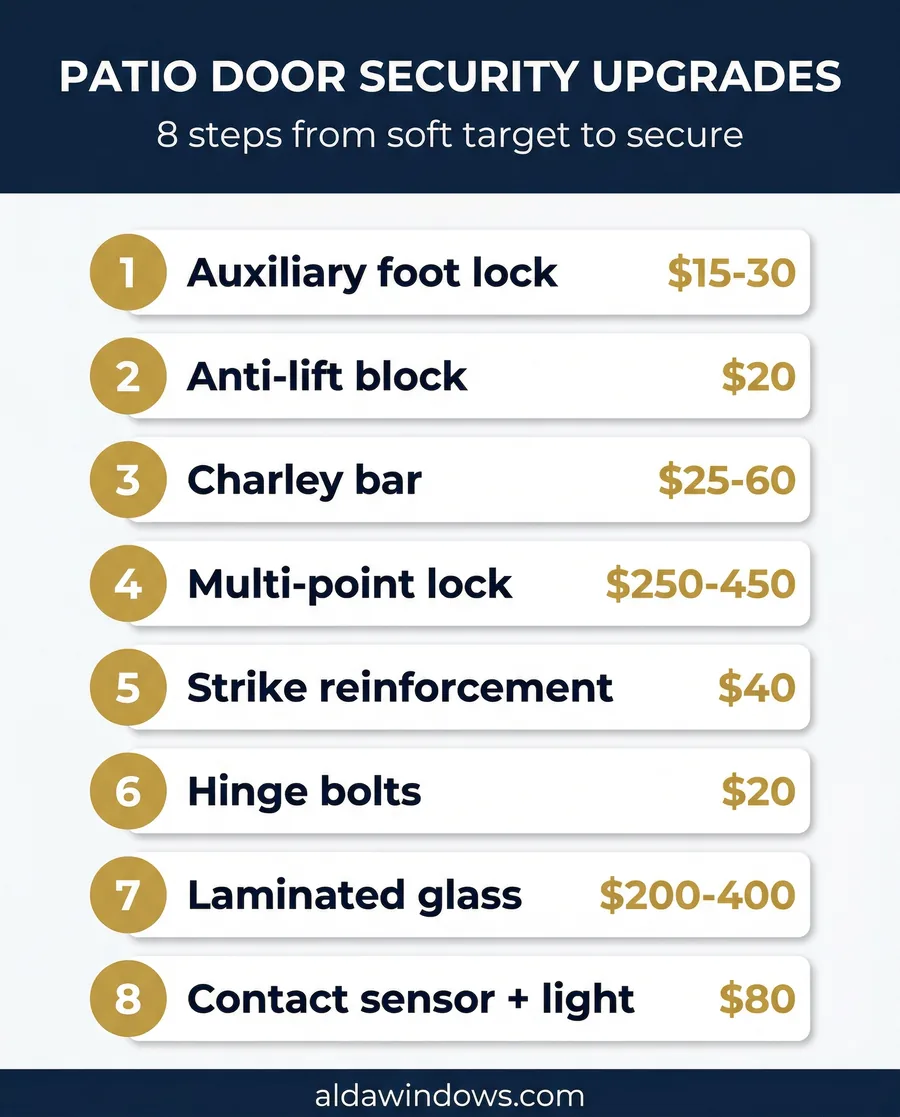
Save this as a PDF and keep it on hand for your project planning.
Download: Patio Door Security Upgrade ChecklistFrequently asked questions
How easy is it to break into a standard sliding patio door?
Easier than most homeowners realise. Stock single-point hook latches can be defeated in under a minute by anyone with a flat pry tool, and older sliders can often be lifted out of the track entirely. This is why patio doors lead Toronto Police Service residential break-in entry-point statistics.
What is the cheapest patio door security upgrade?
An auxiliary foot lock that screws into the bottom rail of the sliding panel. They cost $15 to $30, install in ten minutes, and pin the panel to the track with a solid steel pin that cannot be defeated from outside.
Should I replace my old sliding door with a french door for security?
Not necessarily. A properly upgraded sliding door multi-point lock, anti-lift block, foot lock is at least as secure as a stock french door. French doors gain real security only when the hinges and strike are reinforced with hinge bolts and 3-inch screws.
Is laminated glass worth the cost in patio doors?
Yes if the door is not visible from the street and you are replacing the unit anyway. The $200 to $400 premium per panel buys you a door that holds together even after the glass is broken, blocking entry even after a sustained attack.
Will security upgrades affect my home insurance?
Several Canadian insurers offer small premium reductions (typically 2 to 5 percent on the property portion) for verified door and window security upgrades. Ask your broker about Wayne Dalton, BHA, or similar certifications when specifying the hardware.
Talk to ALDA about your windows and doors
ALDA Windows and Doors has been replacing windows and doors across Toronto and the Greater Toronto Area since the early 2000s. Free in-home assessments, transparent quotes, and a permanent crew that does the installs themselves rather than subcontracting.
Request a free estimate or call us to book a no-pressure consultation.